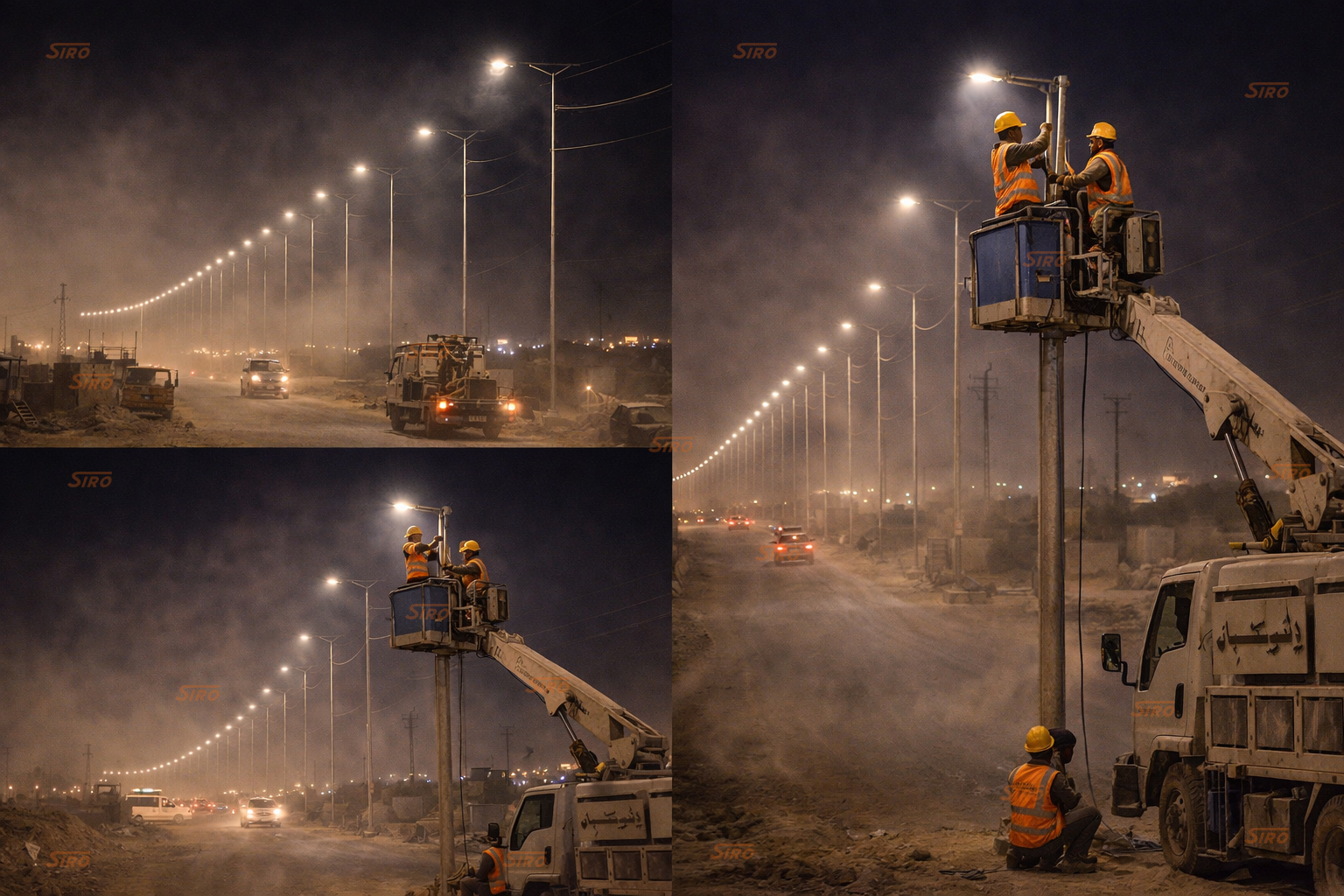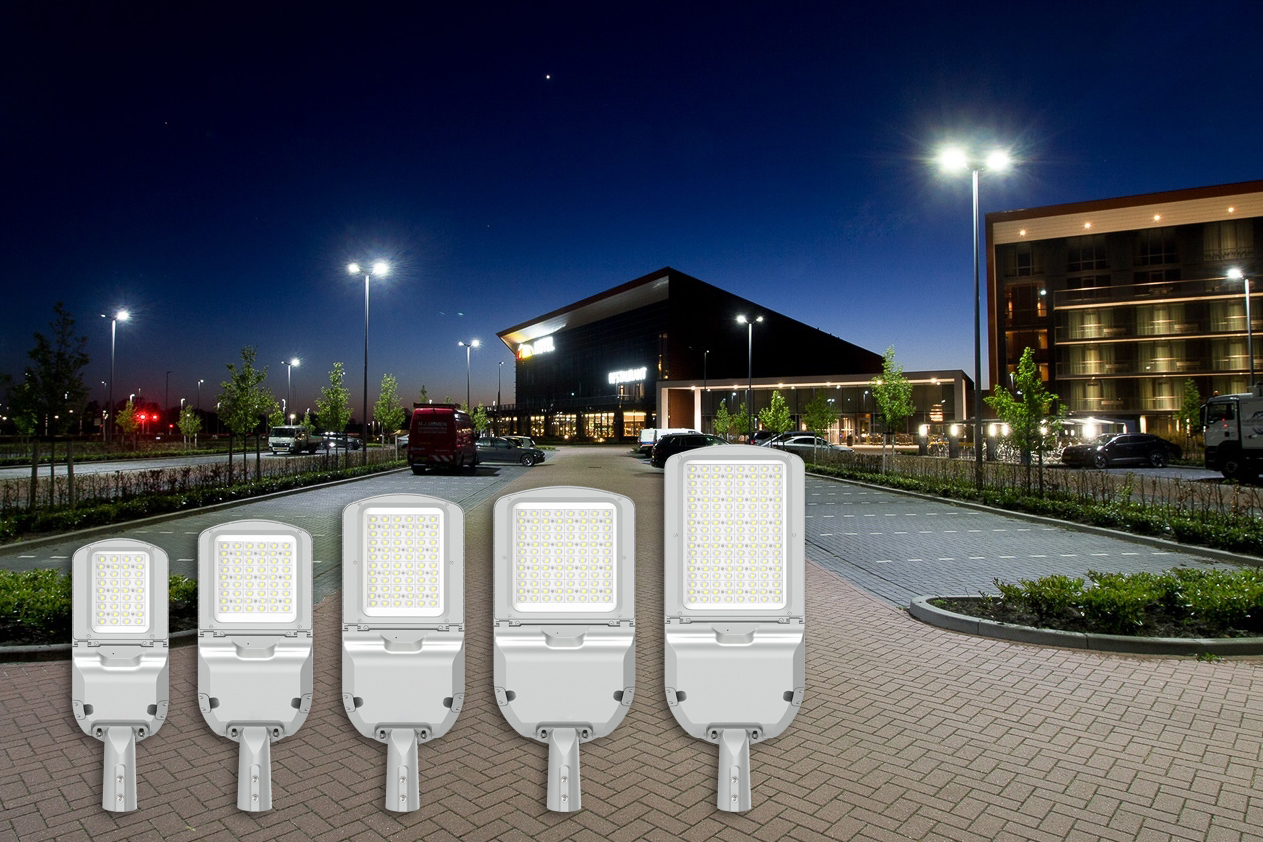
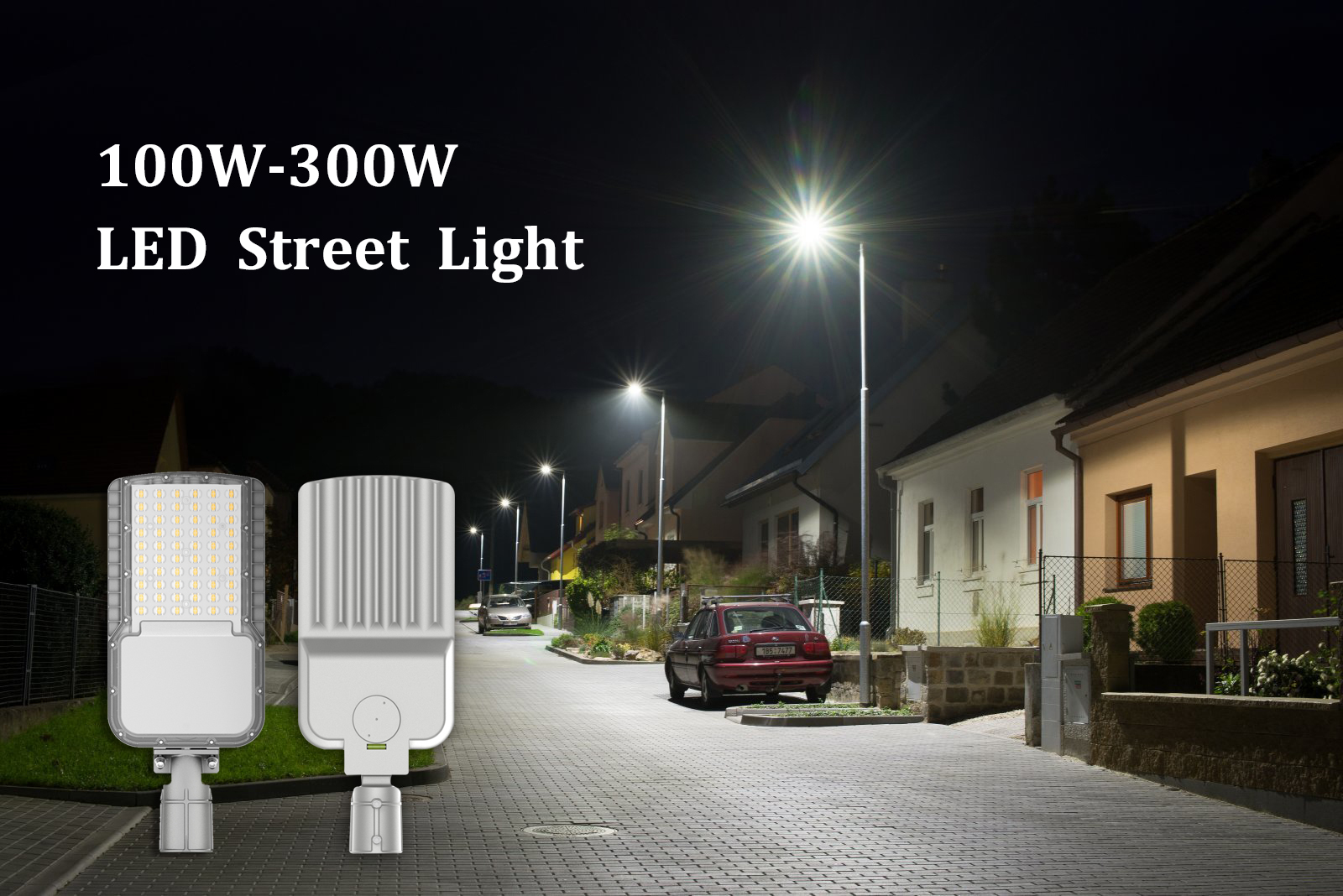
How Many LED Streetlights Are Needed Per Kilometer?
—A Professional Analysis from Road Type to Lighting Standards
In municipal road, industrial park, highway, or rural road lighting projects, the question of “how many LED streetlights are needed per kilometer” seems simple, but it is actually a highly professional issue. Relying solely on experience or a fixed number often leads to insufficient illumination, energy waste, and even rework later on. Therefore, this question must be systematically analyzed from three aspects: road conditions, lighting standards, and luminaire parameters.
I. Road Type is the Primary Factor Determining Quantity
Different roads have completely different functional requirements for lighting, which is the basis for calculating the number of streetlights.
Urban main roads/expressways: High vehicle speeds and dense traffic require good longitudinal and lateral uniformity.
Urban branch roads/secondary roads: Focusing on vehicle and pedestrian safety, with relatively lower illumination requirements.
Industrial park roads: Emphasizing safety and visibility for operations.
Rural or village roads: Focusing on basic lighting and energy saving.
Road width, whether there is a central median, and single-sided or double-sided lighting will directly affect the spacing and number of luminaires.
II. Lighting Standards Determine the “Upper Limit of Lamp Spacing”
Professional projects usually need to refer to local or international lighting standards (such as municipal lighting specifications, road lighting grade requirements). Key indicators include:
Average illuminance (Lux)
Illuminance uniformity
Glare control
Installation height and light distribution method
While meeting the standards, a larger lamp spacing is not always better; it’s crucial to ensure that there are no “dark areas” in the middle and end sections of the road. Once the lamp spacing exceeds a reasonable range, even with higher single-lamp power, it is difficult to compensate for the decrease in lighting uniformity.
III. Luminaire Parameters Directly Affect Quantity Configuration
Even for LED streetlights, the number required per kilometer varies significantly depending on the configuration. Key parameters include:
Actual luminous flux (not nominal power)
Luminous efficacy level
Lens light distribution angle (e.g., Type II / Type III)
Installation height (commonly 6–12 meters)
For example, at the same 8-meter pole height, a high-efficiency streetlight with reasonable light distribution can appropriately increase the lamp spacing while ensuring sufficient illumination, thus reducing the number of lights per kilometer. IV. Common Reference Ranges (Engineering Experience Values)
Under standard design and reasonable parameter conditions, common configurations are as follows (for reference only, not a universal conclusion):
Urban main roads: approximately 30–40 lamps/kilometer
Urban secondary roads: approximately 25–33 lamps/kilometer
Industrial park roads: approximately 28–36 lamps/kilometer
Rural roads: approximately 20–25 lamps/kilometer
The final number still needs to be confirmed through illumination calculations or simulations based on actual site conditions.
V. Professional Conclusion
“How many LED streetlights are needed per kilometer” is not a fixed answer, but an engineering calculation result. A truly professional lighting solution should be based on road conditions, lighting standards, and the actual performance of the luminaires, balancing safety, stability, and long-term operating costs.
In infrastructure lighting projects, the correct quantity configuration is often more important than simply pursuing high power or low price.