Why More Governments Are Choosing Solar Street Lights
— A Rational Shift Driven by Engineering, Budget Control, and Long-Term Infrastructure Planning
Over the past decade, a clear yet quiet transition has been taking place in public road lighting worldwide.
An increasing number of governments, municipalities, and public infrastructure authorities are gradually replacing conventional grid-powered street lights with solar street lighting systems.
This shift is not driven by slogans or short-term environmental trends.
It reflects a rational reassessment of long-term feasibility, financial control, and infrastructure resilience.
When examined from an engineering and public management perspective, the growing adoption of solar street lights is the result of multiple structural factors working together—far beyond simple energy savings.
1. Governments Are Not Focused on “Saving Electricity,” but on Control and Reliability
In public-sector projects, electricity cost alone is rarely the core challenge.
The real issues lie in long-term controllability and risk exposure, including:
-
Lengthy approval processes for grid expansion
-
High costs of power infrastructure in remote areas
-
Dependence on unstable or aging electrical networks
-
Vulnerability to blackouts, disasters, and grid failures
-
Long-term maintenance complexity and outsourcing dependence
For governments, street lighting is not optional—it is a critical component of public safety infrastructure.
The key advantage of solar street lights is not simply that they “use solar energy,” but that they operate independently from the power grid.
Once lighting infrastructure becomes self-powered, governments gain greater control over:
-
Project timelines independent of utility providers
-
Synchronised lighting deployment for new roads or communities
-
Continued operation during power outages or emergencies
-
More predictable long-term budget planning
This explains why solar street lights are often prioritized in developing regions, emerging markets, rural areas, and locations with unstable grids.
2. A Shift from Initial Cost to Life-Cycle Cost Thinking
Historically, many public lighting projects were evaluated primarily on initial procurement and installation costs.
In recent years, however, governments have increasingly adopted Life-Cycle Cost (LCC) evaluation models.
When the operating period is extended to 8–15 years, a clear pattern emerges.
Conventional grid-powered street lights carry significant hidden costs:
-
Long-term and fluctuating electricity expenses
-
Maintenance of cables, transformers, and control cabinets
-
Routine inspections and labor-intensive repairs
-
Secondary costs caused by electrical failures
By contrast, a properly designed solar street lighting system presents a front-loaded but highly predictable cost structure:
-
Clear upfront investment
-
No ongoing electricity bills
-
Reduced maintenance frequency
-
Fewer system-wide failure points
From a public finance perspective, this means:
Greater budget transparency, lower long-term risk, and stronger fiscal control.
This is not about choosing the cheapest solution, but the most manageable one over time.
3. Modern Solar Street Lights Are No Longer About “Brightness”
Some decision-makers still associate solar street lights with early-generation systems—low brightness, unstable performance, and short lifespan.
From an engineering standpoint, this perception is now outdated.
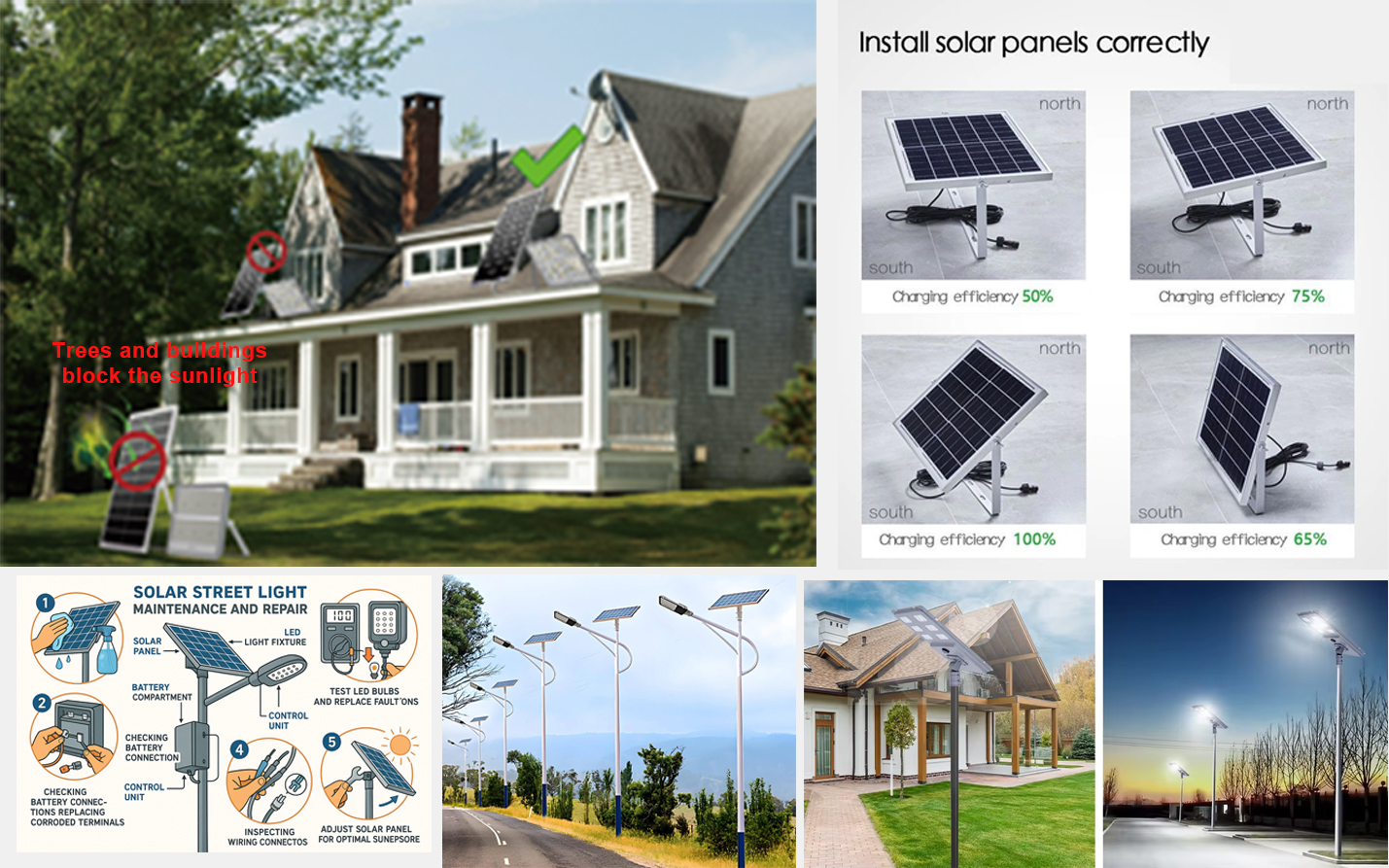
Modern solar street lights function as integrated energy and lighting systems, where performance depends on system design rather than the lamp alone:
-
Solar panel capacity matching
-
Battery chemistry and cycle life
-
Intelligent control strategies (time-based dimming, adaptive output)
-
Optical distribution aligned with road classifications
-
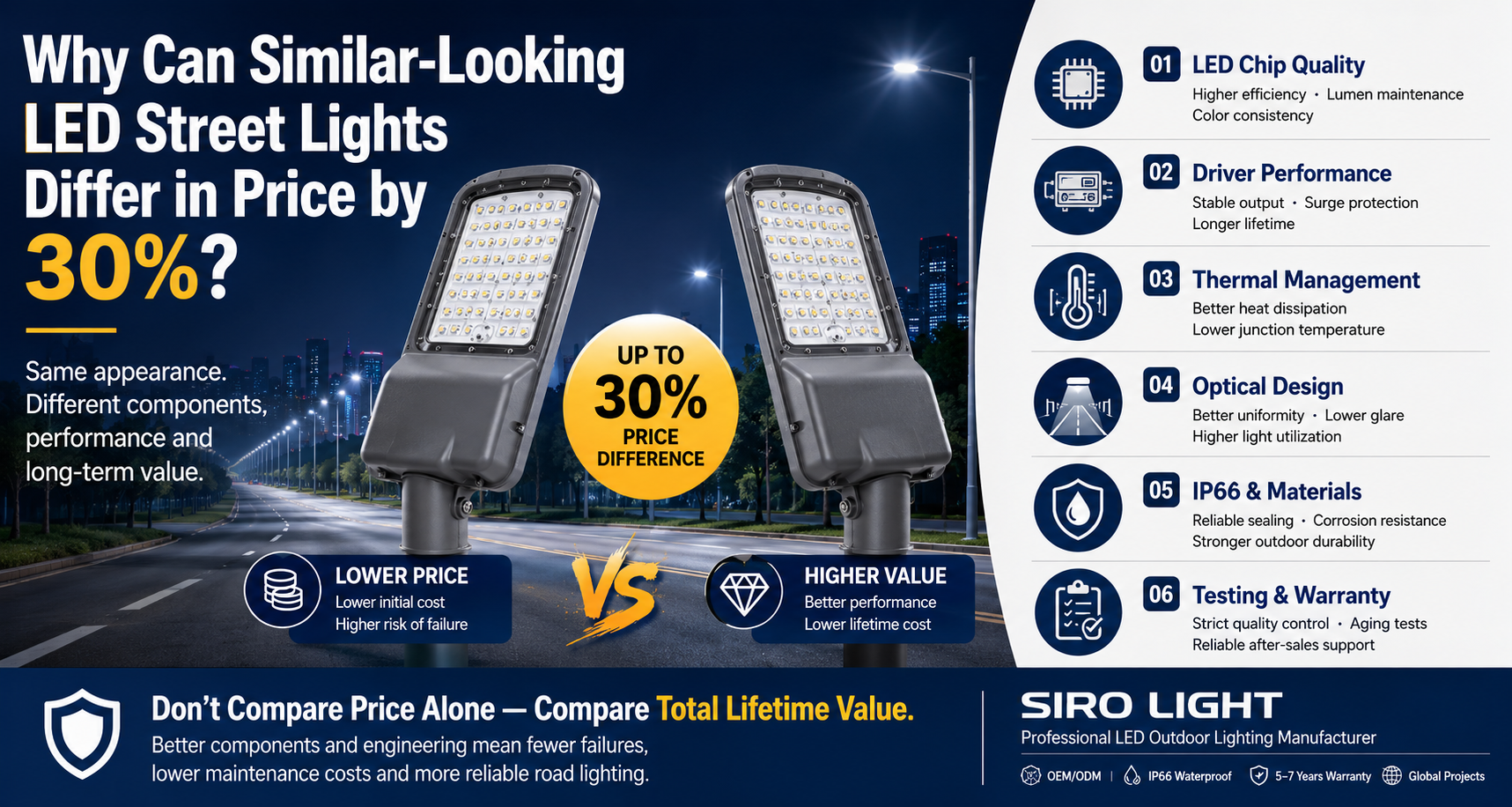
Thermal management and long-term lumen maintenance
In real government projects, the evaluation criteria have shifted from “how bright” to:
-
Compliance with road illumination standards
-
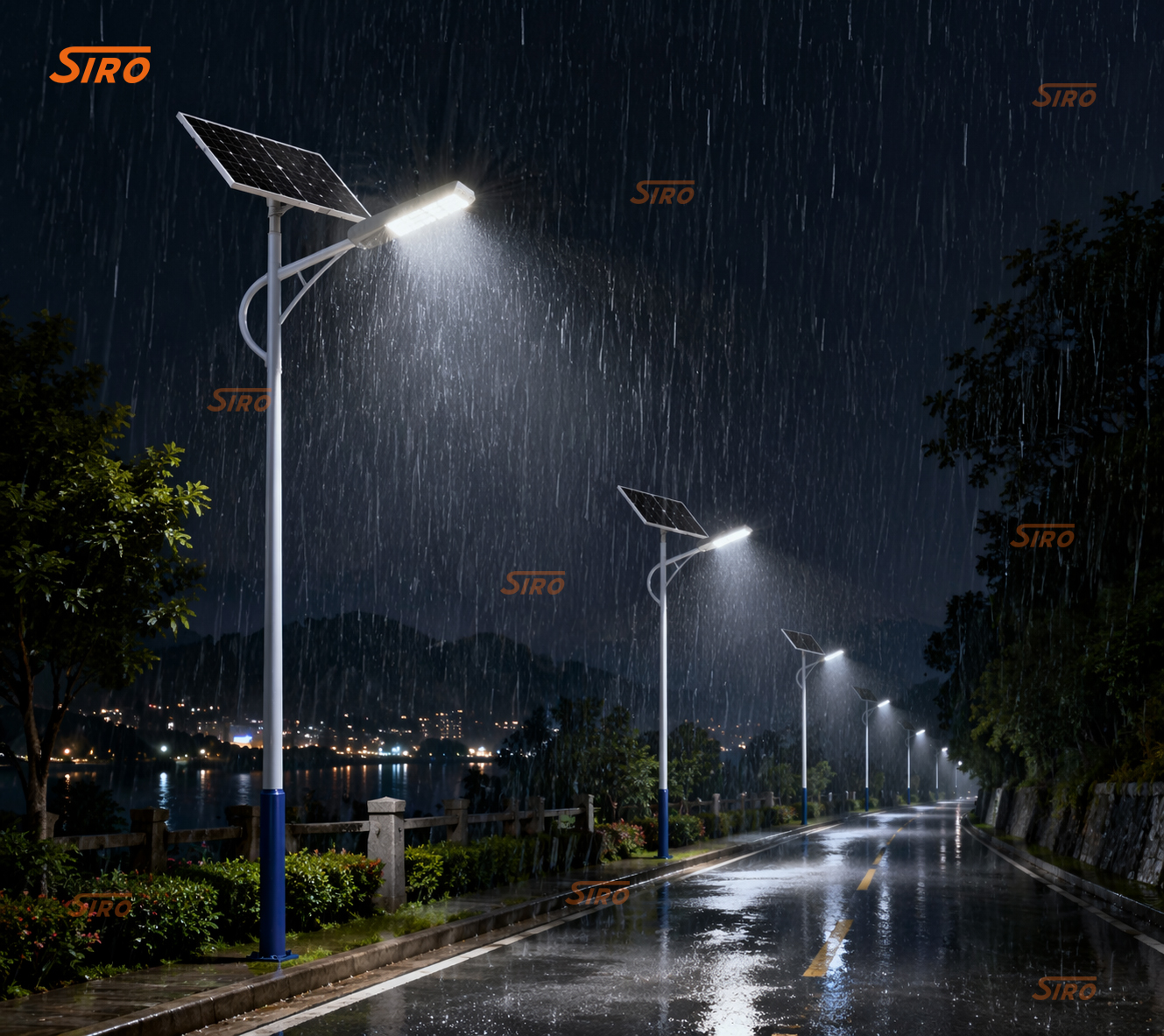
Stability during consecutive cloudy or rainy days
-
Long-term performance consistency
-
Ease of maintenance and component replacement
In essence, solar street lights succeed when they are engineered as infrastructure systems—not consumer products.
4. Maintenance Pressure Has Become a Core Government Concern
Many lighting projects do not fail at installation—they fail three to five years later.
For public authorities, the true challenges are operational:
-
Who maintains the system?
-
How frequently is maintenance required?
-
How are faults diagnosed?
-
Is long-term supply and technical support guaranteed?
Solar street lights address these concerns effectively:
-
No underground cables, reducing hidden faults
-
Modular system design for faster servicing
-
Clear system architecture that simplifies troubleshooting
-
Reduced dependence on multiple external stakeholders
As a result, many government tenders now explicitly specify solar or hybrid lighting solutions, particularly for new developments.
5. From Environmental Symbol to Policy Instrument
Environmental benefits and carbon reduction goals do play a role, but for governments, solar street lights now serve a broader strategic function.
They have become policy instruments, enabling:
-
Alignment with national and international sustainability targets
-
Access to green funding, development loans, or subsidies
-
Demonstrable commitment to public sustainability initiatives
-
Easier adoption in international cooperation and aid projects
In infrastructure programs such as regional development initiatives, aid-funded projects, and municipal upgrades, solar street lighting is often regarded as a low-risk, high-acceptance solution.
6. Governments Are Choosing Long-Term Solutions, Not Individual Products
Ultimately, governments are not choosing a specific lamp or fixture.
They are selecting a solution that can be implemented, maintained, and replicated over the long term.
This explains a reality observed in the market:
While many manufacturers offer solar street lights, only a limited number consistently participate in government projects.
Because public-sector buyers assess more than specifications. They evaluate:
-
Engineering understanding
-
Batch consistency and supply stability
-
Long-term operational logic
-
Commitment to continuous technical support
Conclusion
Governments are choosing solar street lights not because they are new,
but because—under today’s technological and administrative conditions—they represent a more rational, resilient, and sustainable approach to public road lighting.
When lighting is treated as infrastructure rather than equipment,
the true value of solar street lighting becomes clear.