What Should Be Checked During an LED Street Light Installation Project?
A successful LED street light project does not end when the products arrive at the construction site.
For contractors, distributors and project owners, installation quality has a direct impact on lighting performance, electrical safety, maintenance costs and the service life of the complete road lighting system.
Even a reliable LED street light may not perform as expected if the mounting angle is incorrect, electrical connections are poorly protected or the luminaire does not match the actual pole spacing and road width.
So, what should be checked during installation?
1. Check the Pole and Mounting Structure
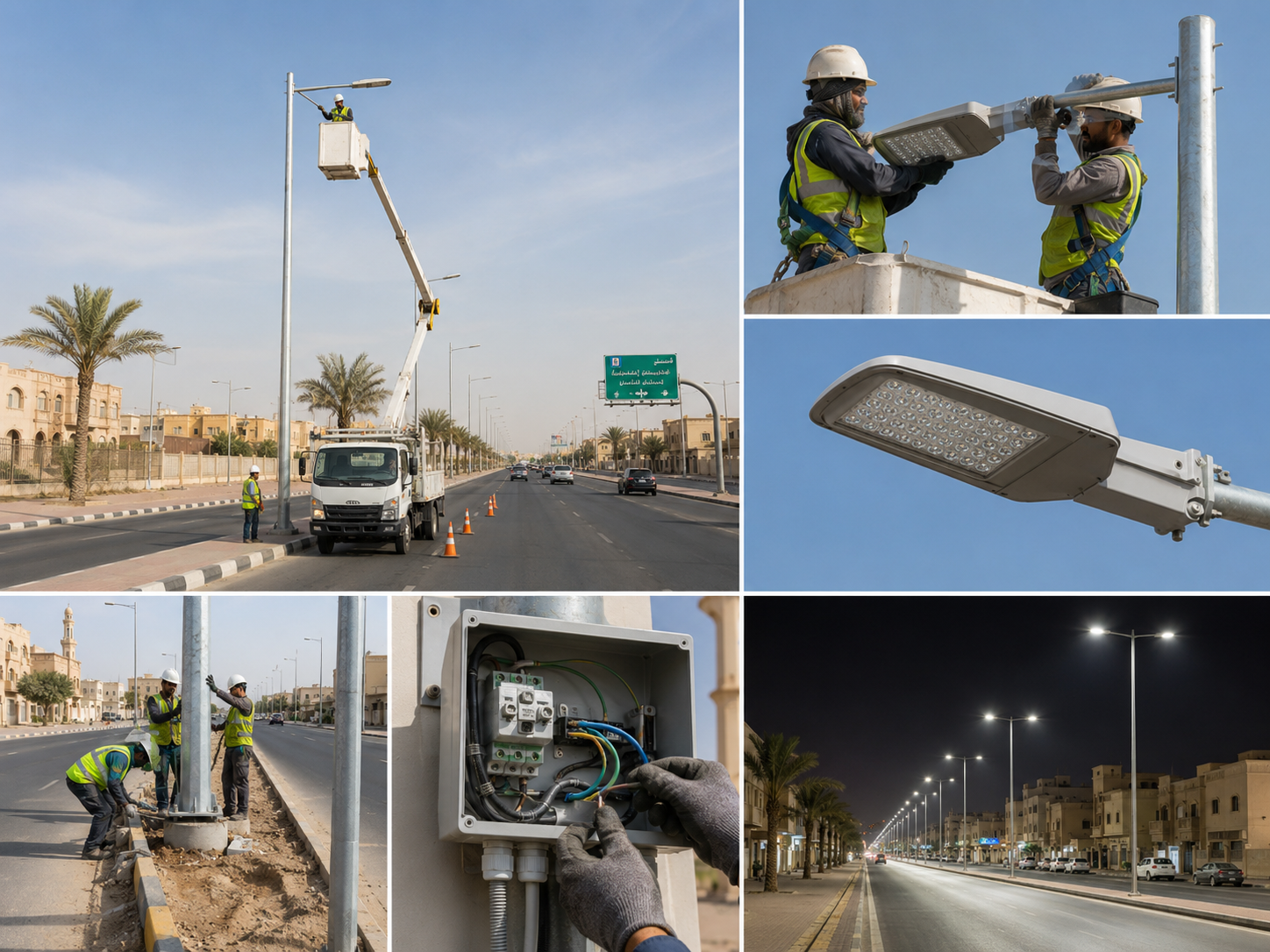
Before installing the luminaire, contractors should inspect the condition of the lighting pole, arm and mounting interface.
The pole diameter and bracket size should match the street light installation design. Bolts should be properly tightened, and the luminaire must remain stable under outdoor wind conditions.
This is especially important for road projects where hundreds or thousands of street lights may be installed.
A small mechanical problem repeated across many poles can become a major maintenance issue later.
2. Confirm the Installation Angle
The mounting angle affects where the light reaches the road.
If the luminaire is tilted too high, unnecessary light may be directed outside the roadway. If the angle is too low, the lighting distance may be reduced and dark areas can appear between poles.
The correct angle should be determined according to:
- Pole height
- Pole spacing
- Road width
- Optical lens
- Installation arrangement
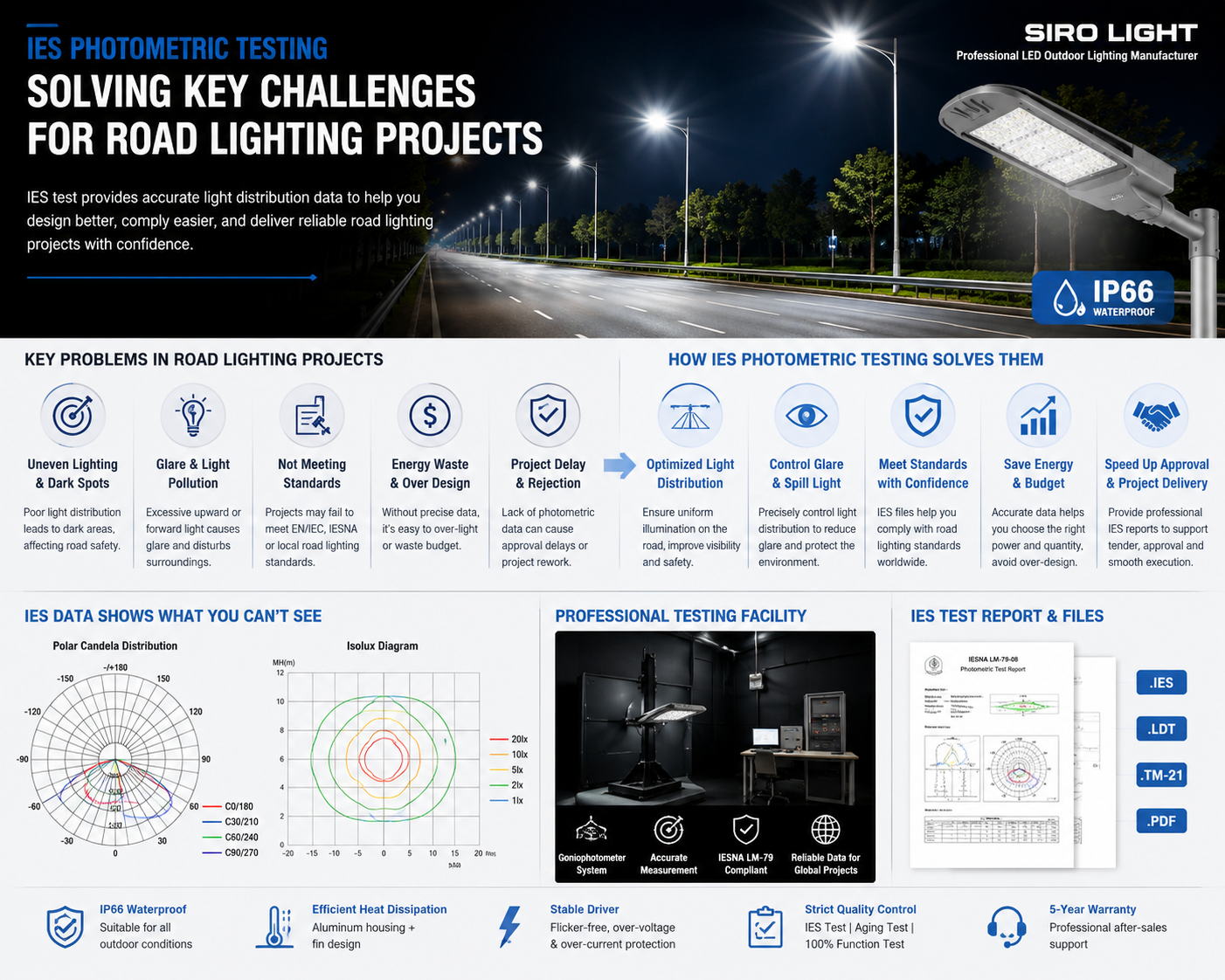
For larger projects, using an IES lighting simulation before installation can help reduce trial-and-error work on site.
3. Pay Attention to Electrical Wiring
Electrical connections are one of the most important parts of street light installation.
Technicians should confirm the local input voltage, driver specifications, cable connections, grounding and electrical protection before energizing the luminaire.
Connections inside the pole or electrical box should be secure and properly protected against moisture.
Poor wiring may cause unstable operation, driver failure or unnecessary maintenance after the project is completed.
4. Check Waterproof Protection
Outdoor LED street lights are exposed to rain, dust, humidity and temperature changes every day.
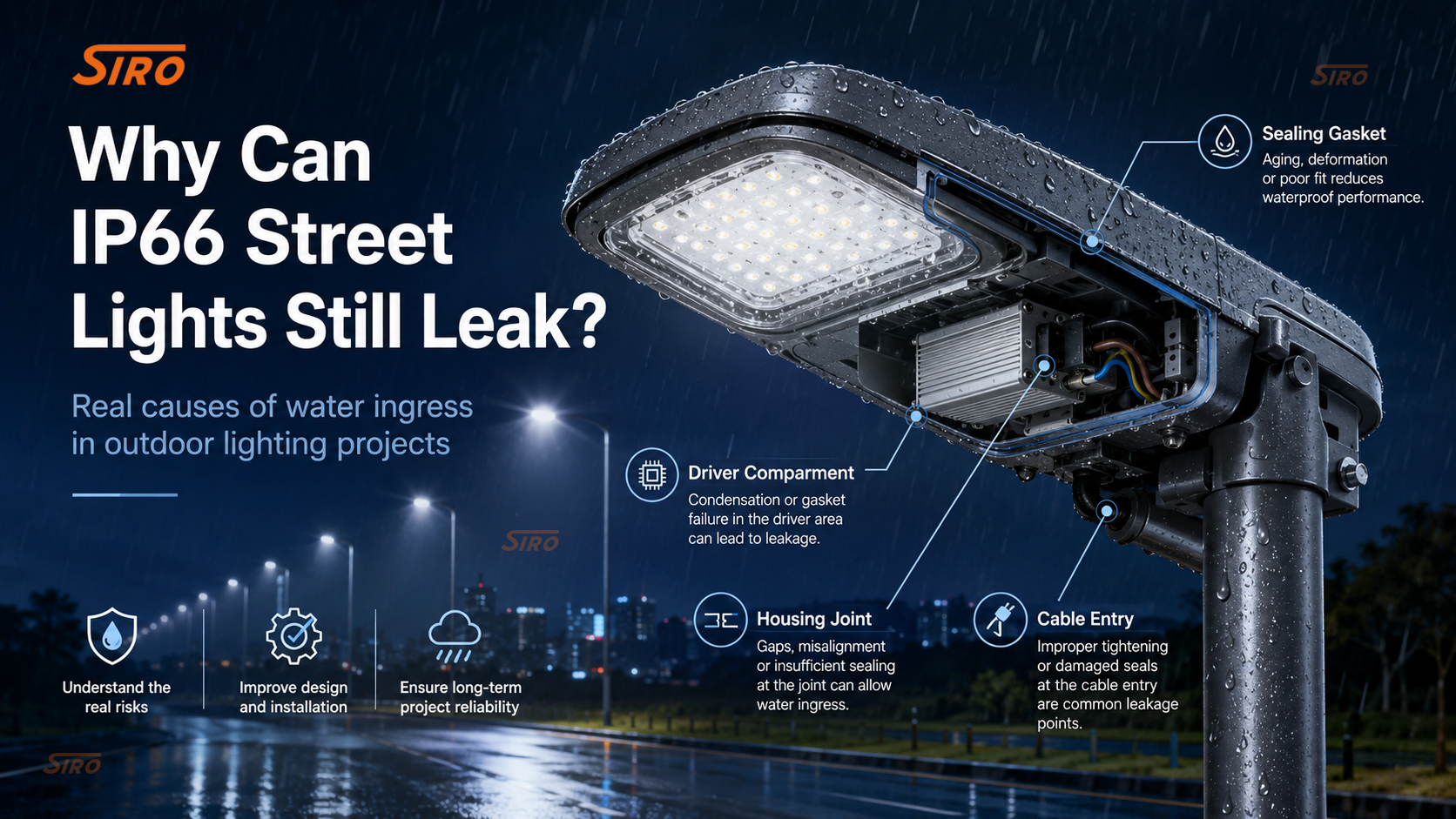
An IP66-rated luminaire provides strong protection, but the overall installation also matters.
Cable glands, connectors, covers and wiring boxes should be properly sealed. Contractors should also avoid damaging waterproof components during installation.
For projects in coastal, rainy or high-humidity areas, these details become even more important.
5. Consider Surge Protection
Street lighting systems are installed in open outdoor environments and can be exposed to electrical surges caused by lightning or grid fluctuations.
The appropriate surge protection level should be selected according to local project conditions.
For overseas buyers, it is useful to confirm this requirement with the LED street light manufacturer before production rather than after the products arrive on site.
6. Test the Lighting Result at Night
Daytime installation only confirms that the luminaire has been mounted correctly.
The real road lighting performance should be checked at night.
Project teams should observe:
- Road brightness
- Lighting uniformity
- Dark areas between poles
- Glare
- Beam coverage
- Lighting at intersections and pedestrian areas
For projects with specific illumination requirements, a lux meter can also be used to compare the actual result with the lighting design.
7. Keep Future Maintenance in Mind
A good street lighting project should not only work on the first night.
It should also be easy to maintain several years later.
Before project acceptance, contractors should confirm access to the driver compartment, wiring position, spare parts availability and after-sales support.
This is one reason why product structure and supplier support are important when selecting an LED street light manufacturer.
Good Road Lighting Starts Before Installation
Many street lighting problems can be avoided before the products reach the construction site.
Road width, pole height, pole spacing, voltage, mounting method and target illumination should ideally be confirmed during the product selection stage.
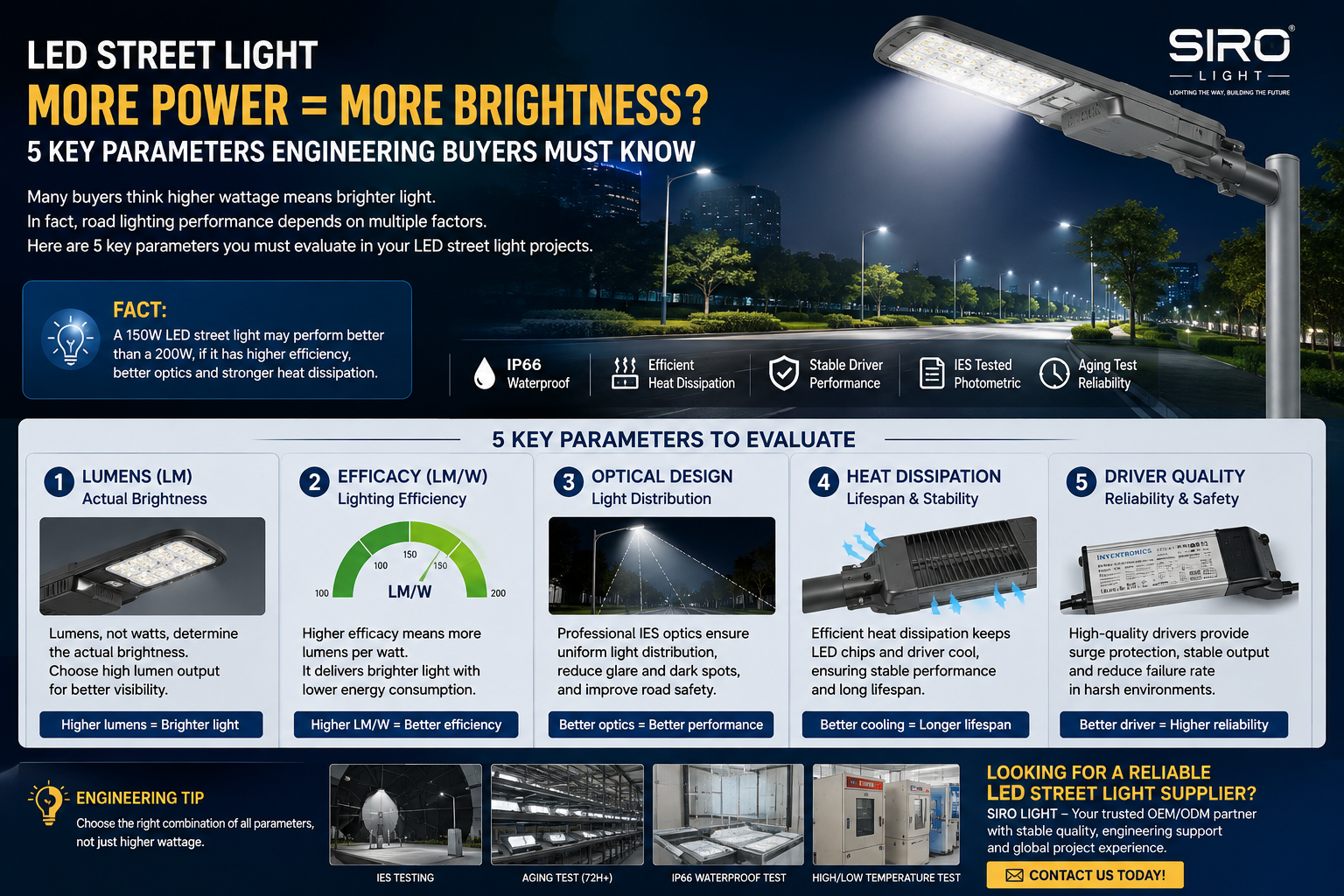
SIRO Light supports overseas distributors, contractors and engineering customers with OEM/ODM LED street lights, IP66 outdoor designs, stable driver configurations, IES files, aging testing and project lighting support.
If you are preparing a new road lighting project, send us your road width, pole height, pole spacing, project quantity and target market.
Our team can help you evaluate the suitable LED street light configuration before installation begins.