Are Higher-Wattage LED Street Lights Brighter? 5 Parameters Every Project Buyer Should Know
When selecting LED street lights for a road lighting project, many buyers first compare wattage. A 200W street light may appear more powerful than a 150W model, so it is easy to assume that higher wattage always means higher brightness.
However, wattage only indicates how much electrical power the lamp consumes. It does not directly show how much useful light reaches the road.
For engineering projects, selecting LED street lights based only on wattage can lead to excessive energy consumption, poor lighting uniformity, glare complaints, and unnecessary investment. Professional buyers should evaluate the complete lighting performance of the luminaire.
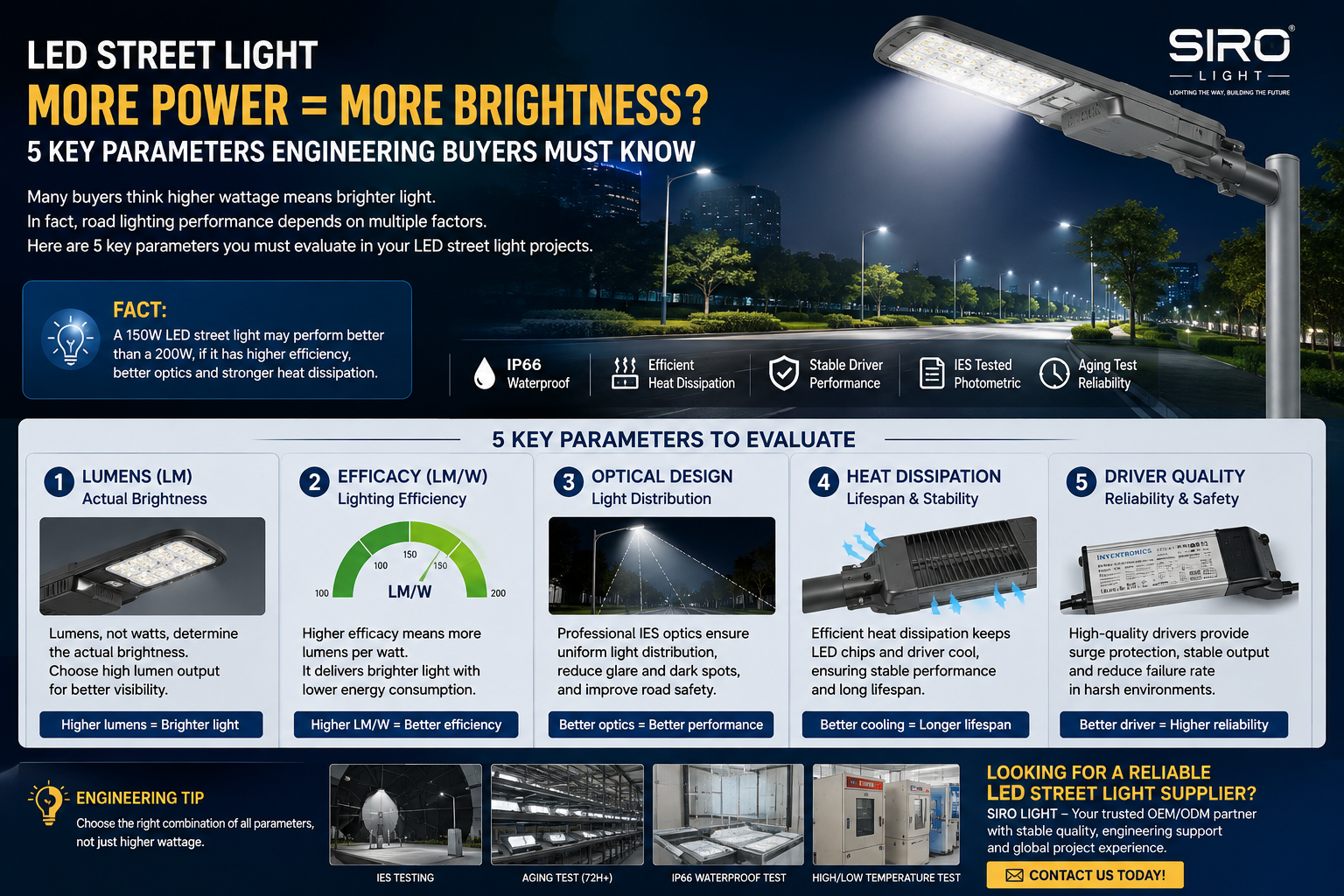
Below are five important parameters that should be checked before confirming an LED street light order.
1. Lumens: The Actual Light Output
Lumens measure the total amount of visible light produced by an LED street light.
For example, two 150W LED street lights may have very different light outputs:
- Model A: 150W × 120 lm/W = 18,000 lumens
- Model B: 150W × 170 lm/W = 25,500 lumens
Although both models consume the same power, Model B produces significantly more light.
This is why project buyers should always request the luminaire lumen output instead of comparing wattage alone. The lumen value should be based on the complete fixture, not only the theoretical output of the LED chips.
2. Luminous Efficacy: More Light with Less Energy
Luminous efficacy is measured in lumens per watt, or lm/W. It shows how efficiently the street light converts electricity into visible light.
A high-efficiency LED street light can achieve the required road brightness with lower power consumption. In many projects, a well-designed 120W lamp may replace a lower-efficiency 150W or 180W fixture.
Higher luminous efficacy can provide several benefits:
- Lower electricity costs
- Reduced cable and power-system load
- Better long-term project economics
- Lower operating temperature
- Longer component lifetime
However, buyers should confirm whether the stated efficiency refers to the LED chip or the complete luminaire. Optical lenses, drivers, protective glass, and internal temperature can all reduce the final system efficacy.
3. Optical Distribution: Where the Light Actually Goes
A street light can have high lumens but still deliver poor road illumination if the optical design is unsuitable.
Road lighting requires controlled light distribution. The lens must direct light toward the carriageway instead of wasting it behind the pole, onto nearby buildings, or into the sky.
Different roads require different beam distributions depending on:
- Road width
- Pole height
- Pole spacing
- Arm length
- Installation angle
- Number of traffic lanes
Professional manufacturers normally provide IES files for lighting simulation. These files allow engineers to calculate average lux, minimum lux, uniformity, glare, and lighting coverage before installation.
For project procurement, an IES simulation is often more valuable than a simple wattage comparison.
4. Thermal Management: Brightness Must Remain Stable
LED output decreases when operating temperature becomes too high. Poor heat dissipation can cause rapid lumen depreciation, color shift, driver failure, and shortened service life.
A reliable LED street light should use an efficient aluminum heat sink with sufficient heat-dissipation area and a structure that allows heat to move away from the LED module and driver.
Buyers should evaluate:
- Housing material and weight
- Heat sink structure
- LED junction temperature control
- Driver compartment design
- Ambient temperature suitability
A lamp may appear very bright during the first few months but lose performance quickly if the thermal design is weak. For long-term road projects, stable lumen maintenance is more important than high initial brightness.
5. Driver Quality and Electrical Protection
The LED driver controls the power supplied to the LED chips. Its quality directly affects flicker, efficiency, operating stability, and product lifetime.
Street lights are normally installed outdoors and may face unstable grid voltage, lightning, and surge events. Project-grade products should include proper surge protection and reliable electrical components.
Important driver-related specifications include:
- Input voltage range
- Power factor
- Total harmonic distortion
- Surge protection level
- Driver efficiency
- Over-temperature protection
- Constant-current stability
For smart city or energy-saving projects, buyers may also require 0–10V dimming, DALI, NEMA socket, Zhaga socket, photocell control, or remote lighting management.
Is a Higher-Wattage LED Street Light Ever Better?
Higher wattage can be necessary for wide roads, high poles, large pole spacing, or areas requiring higher illumination levels. However, the correct wattage should be determined through road conditions and lighting calculations.
A 200W LED street light is not automatically better than a 150W model. If the 150W fixture has higher efficacy, better optical distribution, and stronger thermal management, it may deliver better road performance with lower operating costs.
The best selection is the luminaire that meets the required lux level and uniformity while using the lowest reasonable power.
What Should Buyers Request from a Manufacturer?
Before placing an order, engineering buyers should request:
- Complete luminaire lumen output
- System luminous efficacy
- IES photometric files
- Road lighting simulation
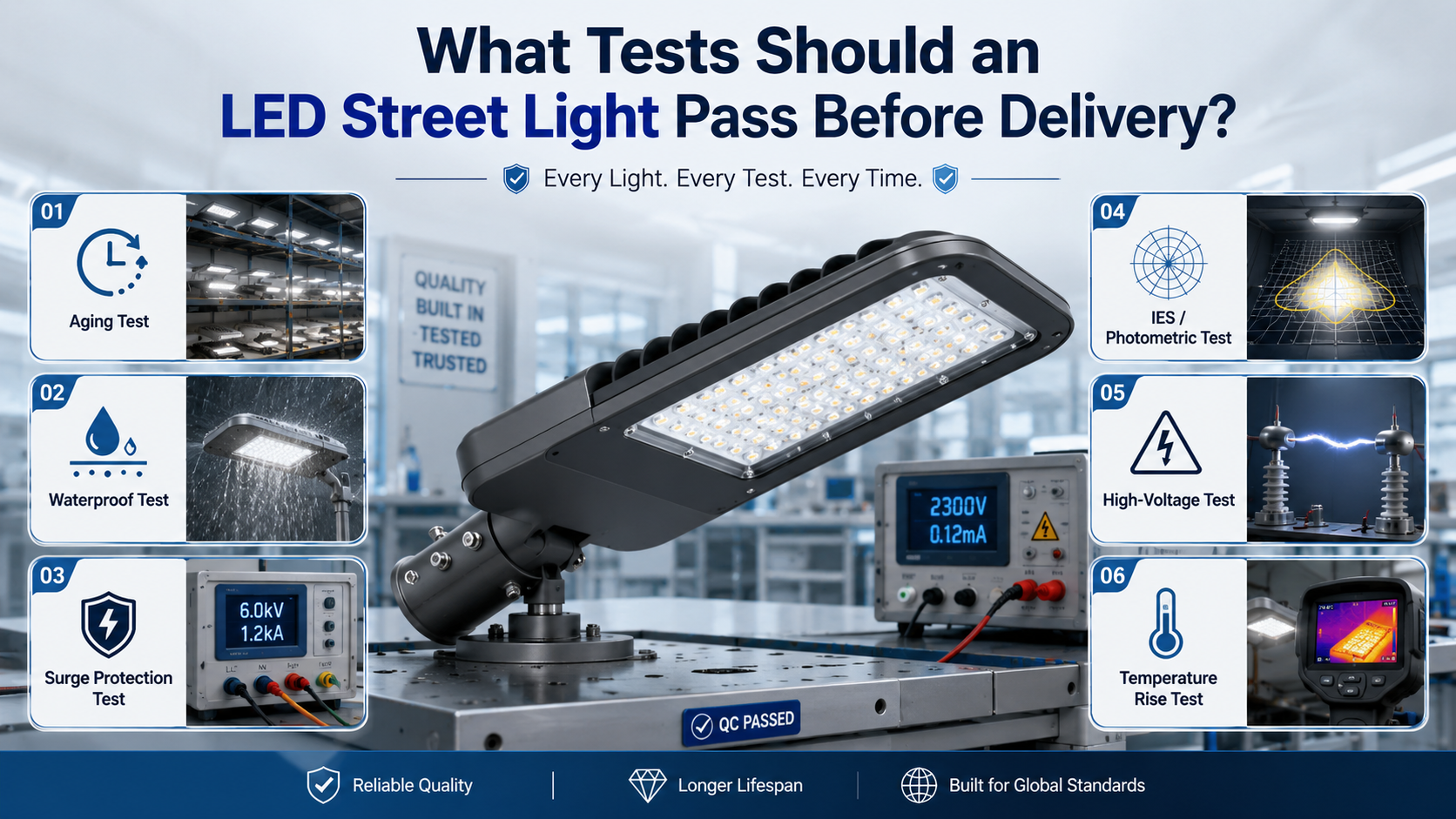
- IP66 waterproof test information
- Surge protection specification
- Driver brand and model
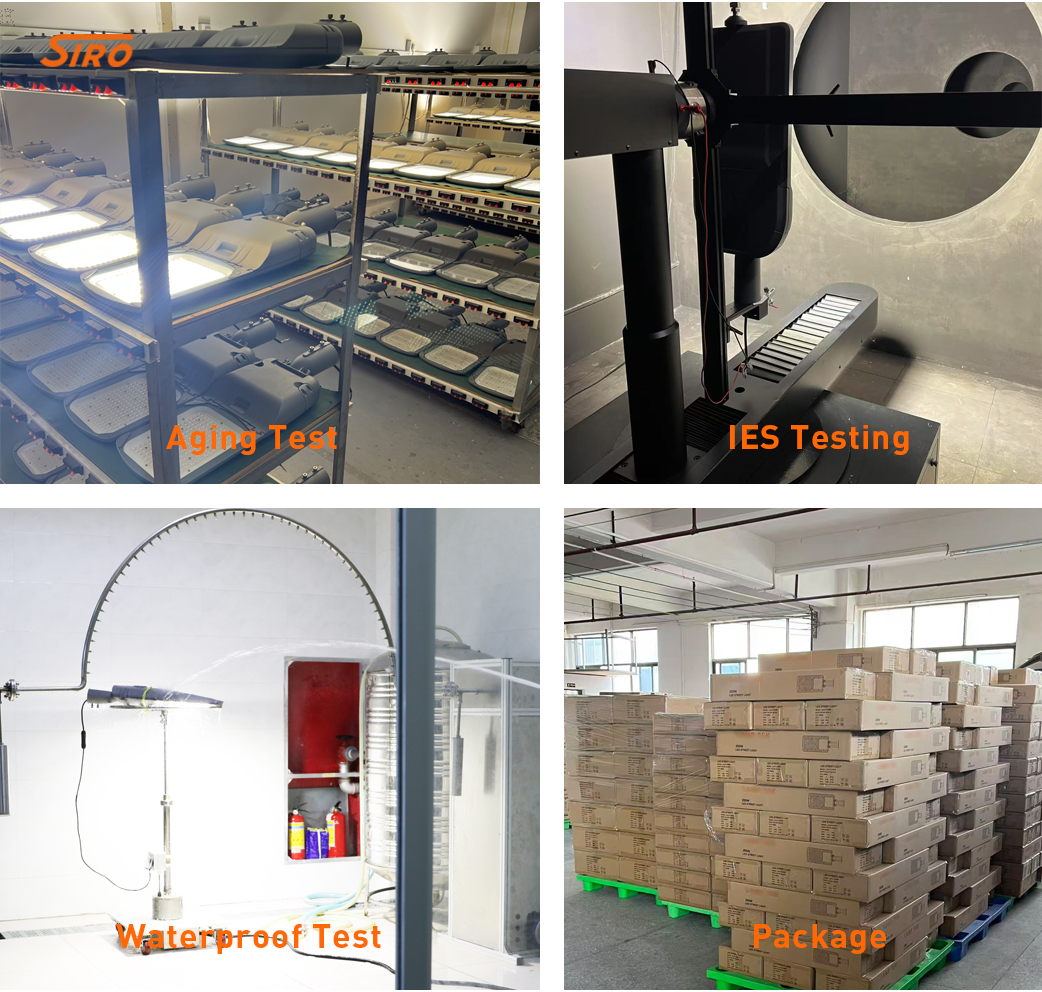
- Aging test records
- Thermal test data
- Warranty terms
These documents help buyers compare products based on measurable performance rather than marketing claims.
FAQ
How many watts are normally required for an LED street light?
Common power options range from 30W to 300W. The correct wattage depends on pole height, road width, pole spacing, required lux level, and optical distribution.
Are lumens more important than watts?
Yes. Watts measure energy consumption, while lumens measure light output. Buyers should compare both lumens and system efficacy.
Why is an IES file important?
An IES file contains the actual light distribution data of the luminaire. It is used to simulate road brightness, uniformity, and glare before installation.
What IP rating is recommended for street lighting?
IP66 is commonly recommended for outdoor road lighting because it provides protection against dust and strong water jets.
Conclusion
Higher wattage does not always mean a brighter or better LED street light. For engineering procurement, lumens, luminous efficacy, optical distribution, thermal management, and driver quality are more important than wattage alone.
SIRO Light provides project-oriented LED street lighting solutions with OEM and ODM support, IES lighting simulation, IP66 waterproof designs, aging testing, stable LED drivers, and professional road lighting recommendations.
Contact SIRO Light to receive a suitable wattage recommendation, IES simulation, and quotation for your next road lighting project.