Why One Lighting Solution Cannot Fit All: Engineering Lighting Design for 9 Real-World Applications
In real-world lighting projects, one of the most common misconceptions is this:
“If the brightness is high enough, the lighting will work everywhere.”
But experienced engineers and project managers know that this is far from reality.
Different environments demand completely different lighting strategies — not just in wattage, but in optical design, thermal management, waterproof structure, and installation logic.
This is why professional lighting projects are always built based on application-specific engineering solutions, not generic products.
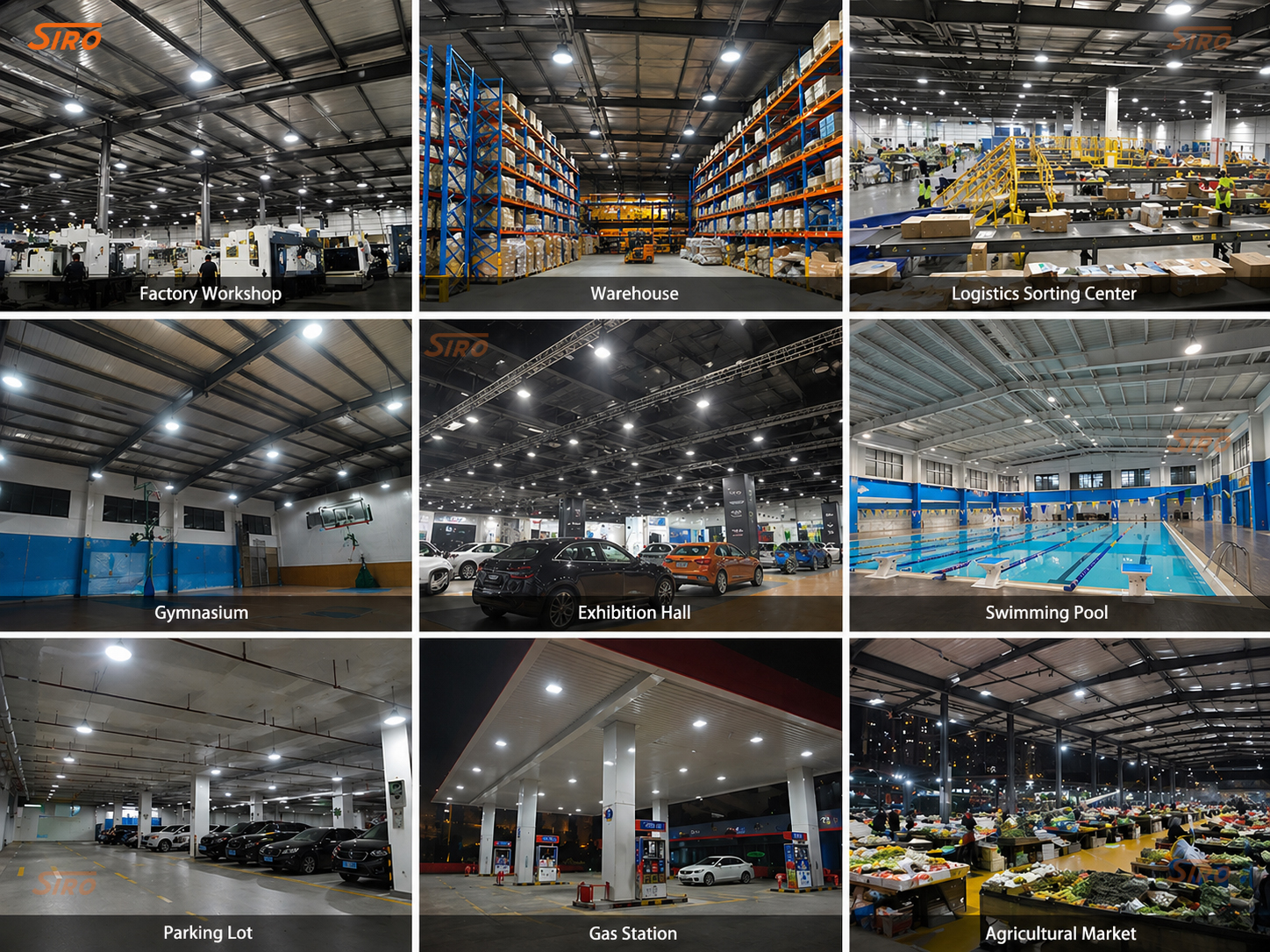
Below, we break down 9 typical application scenarios and explain what truly matters behind each one.
1. Factory Workshop Lighting: Stability Over Brightness
In industrial workshops, lighting is not just about illumination — it directly affects:
- Worker safety
- Production efficiency
- Equipment precision
Key engineering requirements:
- High uniformity (avoid shadow zones)
- Flicker-free drivers (protect eyesight)
- Efficient heat dissipation (24/7 operation)
- High luminous efficacy (≥150 lm/W)
Common failure point:
Low-quality drivers causing flickering or early failure under continuous operation.
2. Warehouse Lighting: Height & Beam Distribution Matter More
Warehouses typically involve high ceilings and narrow aisles.
This means lighting must focus on:
- Narrow beam angles (for high racks)
- Strong vertical illumination
- Reduced light loss
Engineering solution:
- Use Type I / Type II optics
- Optimize mounting height vs beam angle
Common mistake:
Using wide-angle floodlights, resulting in wasted light and poor visibility between racks.
3. Logistics Sorting Center: Fast Response & High Efficiency
Sorting centers operate under intense, fast-paced conditions.
Lighting must ensure:
- Instant start (no delay)
- High brightness consistency
- Low glare (worker comfort)
Key requirement:
- High CRI (Color Rendering Index) for barcode scanning accuracy
4. Gymnasium Lighting: Anti-Glare is Critical
Sports environments demand more than brightness:
- Anti-glare design (UGR control)
- Uniform illumination across the court
- No flicker (for athlete performance and camera recording)
Engineering focus:
- Precise optical lens design
- Controlled beam distribution
5. Exhibition Hall Lighting: Visual Comfort & Presentation
In exhibition spaces, lighting affects perception and branding.
Key factors:
- Soft, uniform lighting
- High CRI for true color display
- Balanced brightness (no hotspots)
Common issue:
Overly bright lights causing visual fatigue and poor product presentation.
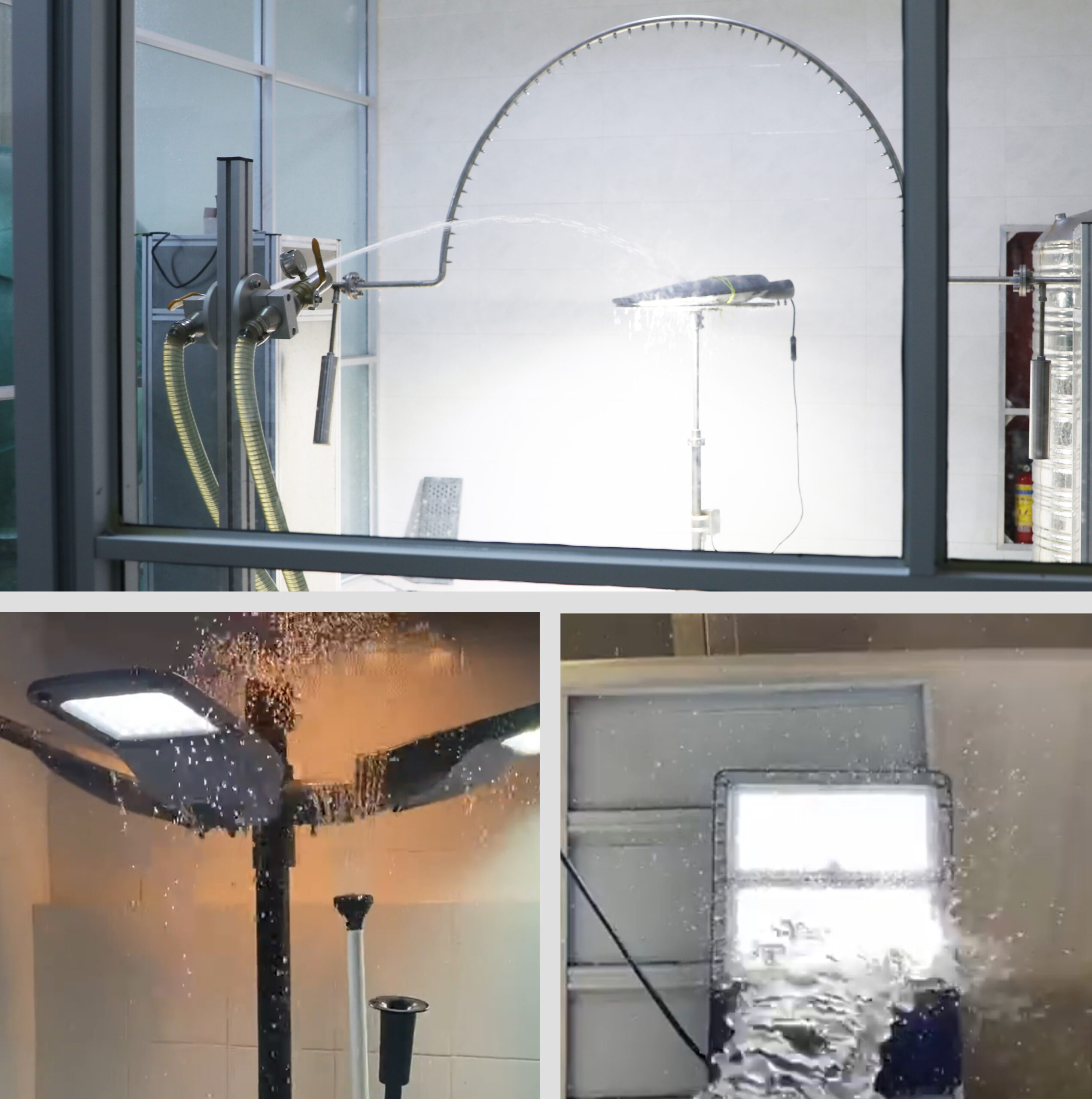
6. Swimming Pool Lighting: Waterproofing is NOT Just IP Rating
Swimming pool environments are extremely humid.
Important factors:
- Real waterproof structure (not just IP66 label)
- Anti-corrosion materials
- Safe electrical isolation
Engineering truth:
👉 IP rating alone does NOT guarantee waterproof performance
👉 Structural sealing design is what really matters
7. Parking Lot Lighting: Cost vs Coverage Optimization
Parking lots require large-area coverage with cost efficiency.
Design priorities:
- Wide beam angles
- High pole spacing optimization
- Long lifespan (low maintenance cost)
Goal:
Achieve maximum coverage with minimum number of fixtures
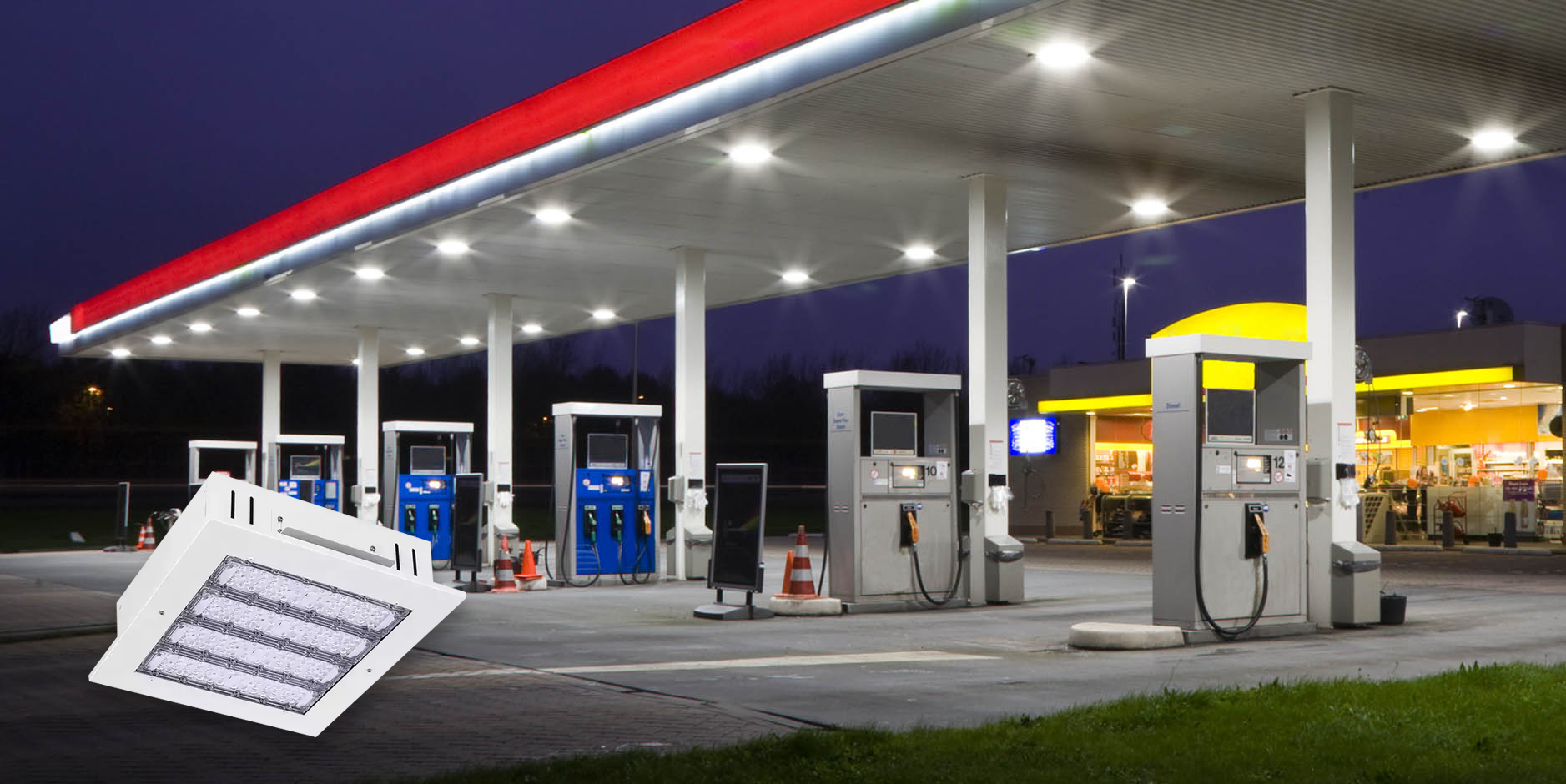
8. Gas Station Lighting: Safety & Explosion-Proof Considerations
Gas stations require:
- High brightness (for security)
- Stable lighting (no flicker)
- Safety-certified components
Key engineering factors:
- Surge protection (≥10kV)
- Reliable drivers
- Consistent color temperature
9. Agricultural Market Lighting: Harsh Environment Resistance
Markets often involve:
- Dust
- Moisture
- Temperature fluctuations
Lighting must handle:
- Strong waterproof sealing
- Dust-proof structure
- Stable performance under unstable voltage
The Real Engineering Logic Behind Lighting Projects
Across all these scenarios, one principle remains constant:
Lighting success is NOT determined by brightness alone.
Instead, it depends on:
- Optical design (beam angle & distribution)
- Heat dissipation structure
- Driver reliability
- Waterproof engineering
- Installation logic
Why Many Projects Fail After Installation
From real project experience, most failures come from:
- Wrong beam angle selection
- Poor heat dissipation design
- Fake lumen data
- Weak waterproof structure
- Incorrect installation height or angle
Final Thought: Lighting is an Engineering System, Not Just a Product
A reliable lighting solution is not just a lamp.
It is a complete engineering system, combining:
- Light source
- Power system
- Optical design
- Structural protection
- Real-world installation logic
Only when all these elements work together can a project truly succeed.
Looking for the Right Lighting Solution?
If you’re working on:
- Industrial facilities
- Warehousing projects
- Infrastructure lighting
- Commercial or public spaces
Choosing the right lighting partner means choosing engineering reliability, not just specifications on paper.