What Is the Warranty Period for Outdoor LED Lights?
When investing in outdoor LED lights—whether for roads, parking lots, industrial zones, or commercial properties—one of the most frequently asked questions is:
“How long is the warranty?”
But a more important question should be:
“What does that warranty really cover?”
From a professional engineering and project-delivery perspective, the warranty period for outdoor LED lighting is not just a number on paper. It reflects design quality, component selection, manufacturing control, and long-term performance confidence.
Typical Warranty Period for Outdoor LED Lights
In today’s market, most outdoor LED lighting products come with the following warranty structures:
-
2 years – Entry-level or price-driven projects
-
3 years – Standard commercial grade
-
5 years – Engineering-grade, infrastructure-level lighting
-
7–10 years – Limited cases with strict operating conditions
For municipal road lighting, solar street lights, industrial flood lighting, and infrastructure projects, 5 years has become the industry benchmark.
However, not all 5-year warranties are equal.
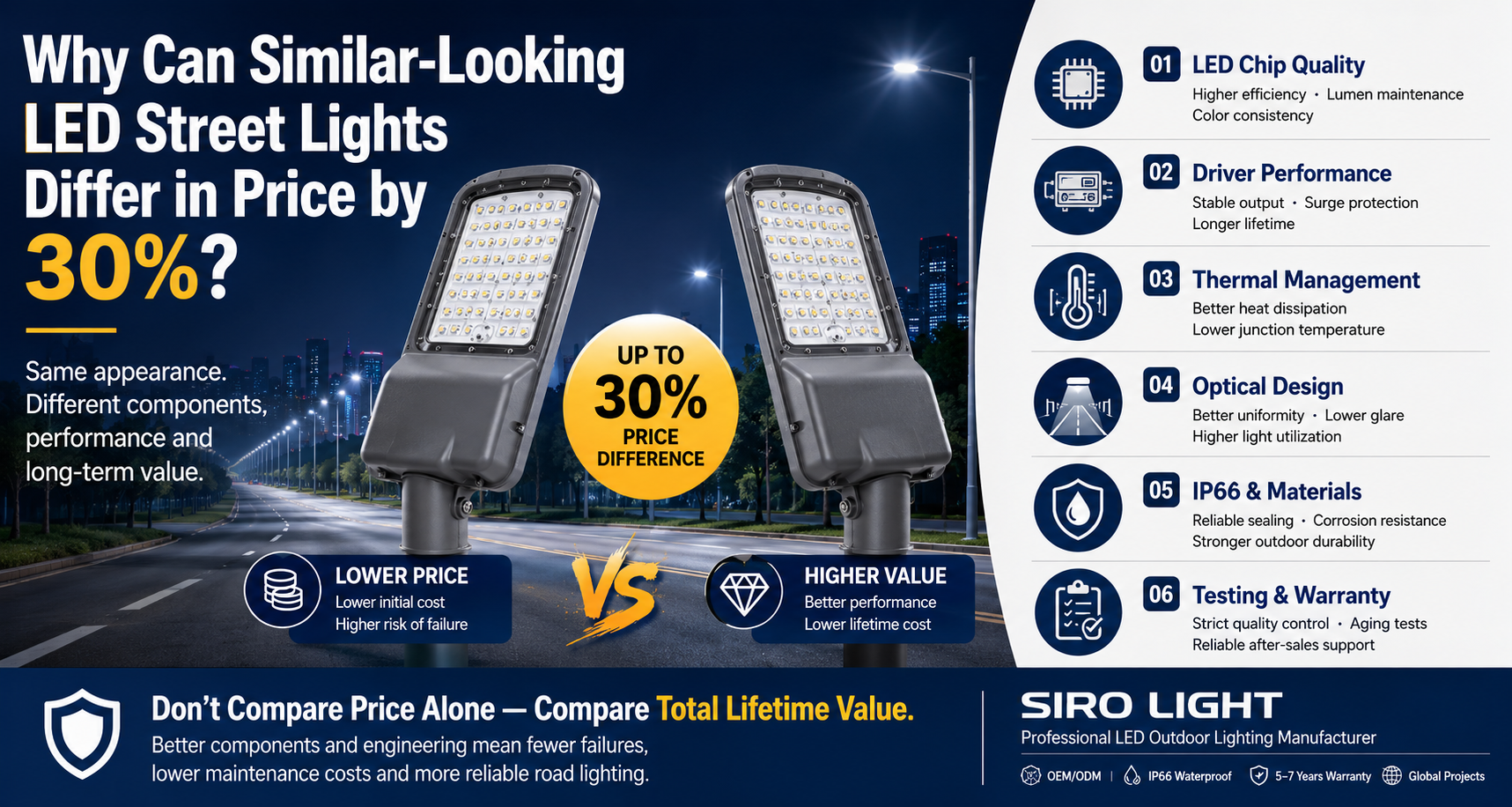
What Determines the Warranty Period?
A genuine warranty is built on engineering fundamentals. Here are the key factors that determine how long an outdoor LED light can reliably operate:
1️⃣ Thermal Design
Heat is the primary cause of LED failure. A proper thermal structure ensures:
-
Stable junction temperature
-
Reduced lumen depreciation
-
Longer driver lifespan
High-quality outdoor fixtures use:
-
Thick aluminum die-casting housings
-
High thermal conductivity silicone
-
Large-surface heat dissipation fins
Without solid thermal management, even a “high lumen per watt” product may fail within a year.
2️⃣ LED Chip Quality
The LED chip directly affects light output stability and lifespan. Reputable manufacturers use:
-
High-quality large-chip LEDs
-
Verified LM-80 data
-
Proper optical lens protection
Cheap or unverified chips may show fast lumen decay, color shift, or complete failure within months.
3️⃣ LED Driver Reliability
In outdoor lighting, the driver is often the weakest point.
Professional-grade outdoor LED lights include:
-
Surge protection (10kV or higher for road lighting)
-
Wide voltage input (AC100–277V or 347–480V)
-
IP-rated waterproof driver housing
Poor driver quality is responsible for most early warranty claims.
4️⃣ Waterproof & Environmental Protection
Outdoor lighting must handle:
-
Heavy rain
-
Dust and sand
-
High humidity
-
Coastal corrosion
-
Extreme heat or cold
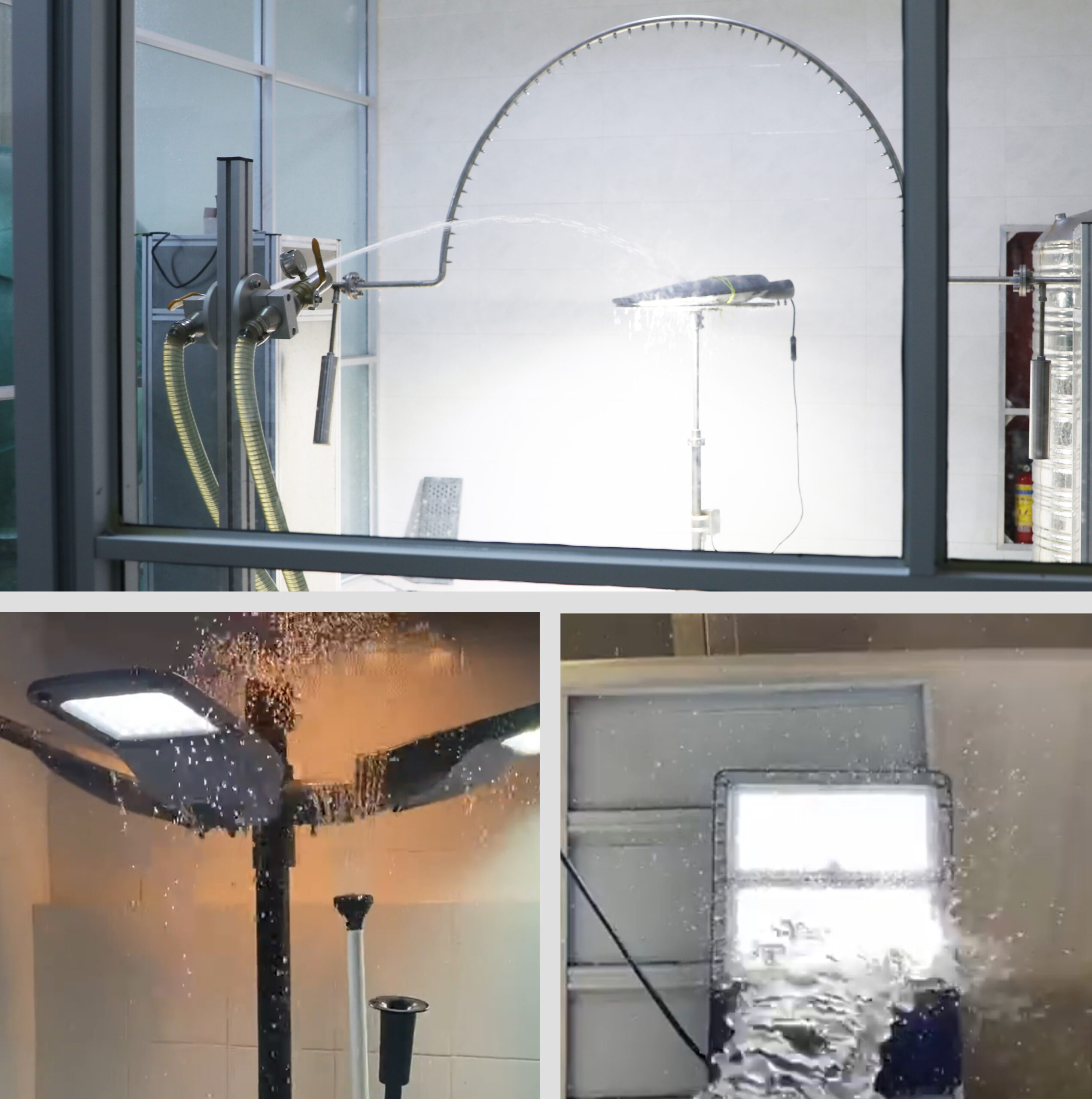
An IP65/IP66 rating is standard, but proper sealing processes—such as silicone edge sealing and aging tests—are what ensure long-term durability.
What Does a 5-Year Warranty Usually Cover?
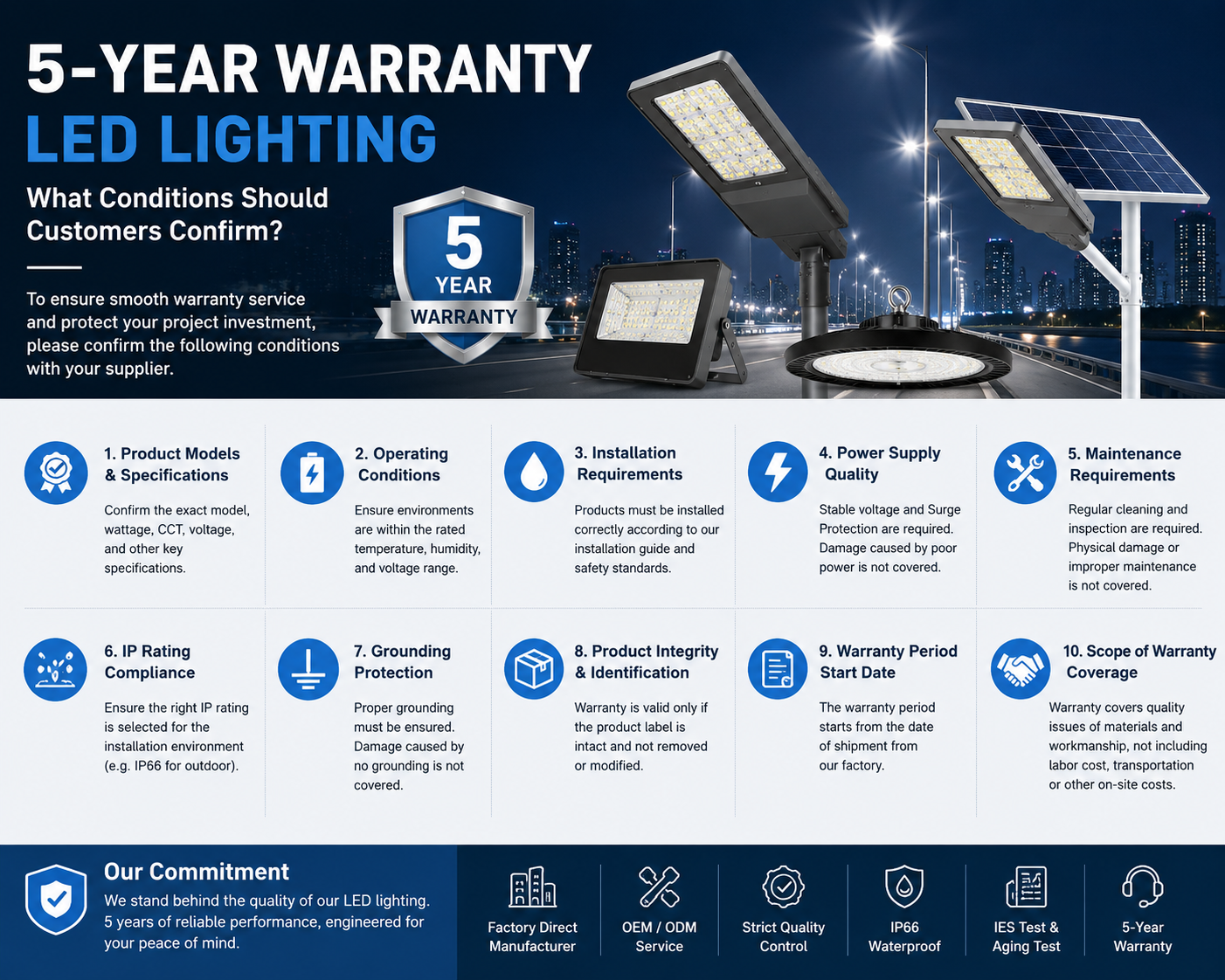
From a customer’s perspective, understanding coverage is critical. A professional warranty typically includes:
✔ LED module failure
✔ Driver malfunction
✔ Manufacturing defects
✔ Abnormal lumen drop under standard use
However, warranties usually do not cover:
✖ Improper installation
✖ Voltage fluctuation damage without surge protection
✖ Physical damage
✖ Unauthorized modification
For solar street lights, battery warranties are often separate (typically 3–5 years depending on battery type).
Why Infrastructure Projects Prefer 5-Year Warranty Minimum
Government and infrastructure buyers require long-term reliability because:
-
Replacement costs are high
-
Maintenance disrupts traffic and operations
-
Labor and lift equipment expenses exceed fixture cost
A short warranty increases long-term operational risk.
That’s why serious projects demand:
-
Batch consistency
-
Production records
-
Aging test logs
-
Photometric test reports
-
Real project references
Warranty is not marketing—it is a risk-control tool.
Does Longer Warranty Always Mean Better Quality?
Not necessarily.
Some suppliers advertise 7–10 year warranties without providing:
-
Documented testing
-
Clear replacement policy
-
After-sales structure
A meaningful warranty requires:
-
Factory-based manufacturing
-
Spare parts availability
-
Clear claim procedures
-
Long-term business stability
Without these, even a “10-year warranty” may be difficult to enforce.
Questions Buyers Should Ask Before Choosing Outdoor LED Lights
If you are evaluating suppliers, consider asking:
-
Is the 5-year warranty full replacement or parts only?
-
Is surge protection standard or optional?
-
What testing is done before shipment?
-
Are there aging test records?
-
Is there documented LM-80 or photometric data?
-
What is the expected L70 lifetime?
These questions reveal whether the warranty is supported by engineering logic.
Professional Recommendation
For most outdoor applications—especially:
-
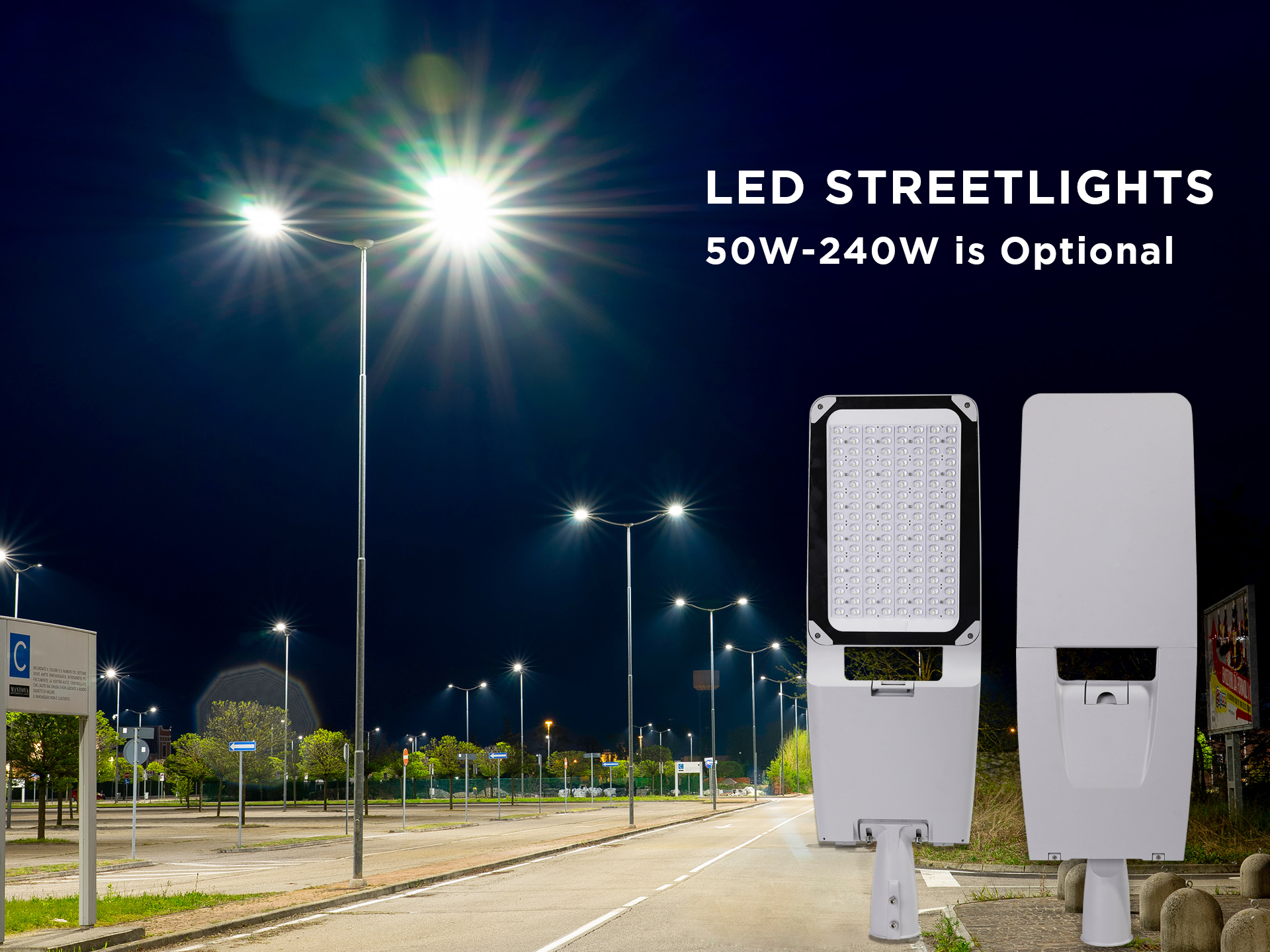
LED street lighting
-
Solar street lighting
-
Parking lot lighting
-
Industrial flood lighting
A 5-year warranty backed by real production testing is the most practical and reliable choice.
It balances performance, cost control, and long-term risk management.
Final Thought
When selecting outdoor LED lighting, do not focus only on lumen output or initial price.
Focus on:
-
Long-term stability
-
Component quality
-
Manufacturing consistency
-
Transparent warranty structure
Because in outdoor environments, lighting is not just about brightness.
It is about reliability over time.
And a warranty period, when properly engineered and supported, reflects exactly that.