Why Solar Street Lights Fail in Rainy Season
When a solar street light works well in sunny weather but begins to dim, flicker, or shut down completely during the rainy season, the real problem is usually not “lack of sunlight” alone. In many outdoor projects, rainy season failure is the result of poor system design, weak structural waterproofing, battery instability, incorrect installation angle, or hidden wire problems.
That is why professional buyers, contractors, and municipal project managers should never judge a solar street light only by wattage or appearance. A reliable solar street lighting system must be engineered to survive real outdoor conditions, especially long periods of rain, high humidity, dust, and unstable charging environments.
1. Rainy Season Does Not Cause Failure by Itself
Rain is only the trigger. The real failure comes from weaknesses already built into the product or created during installation.
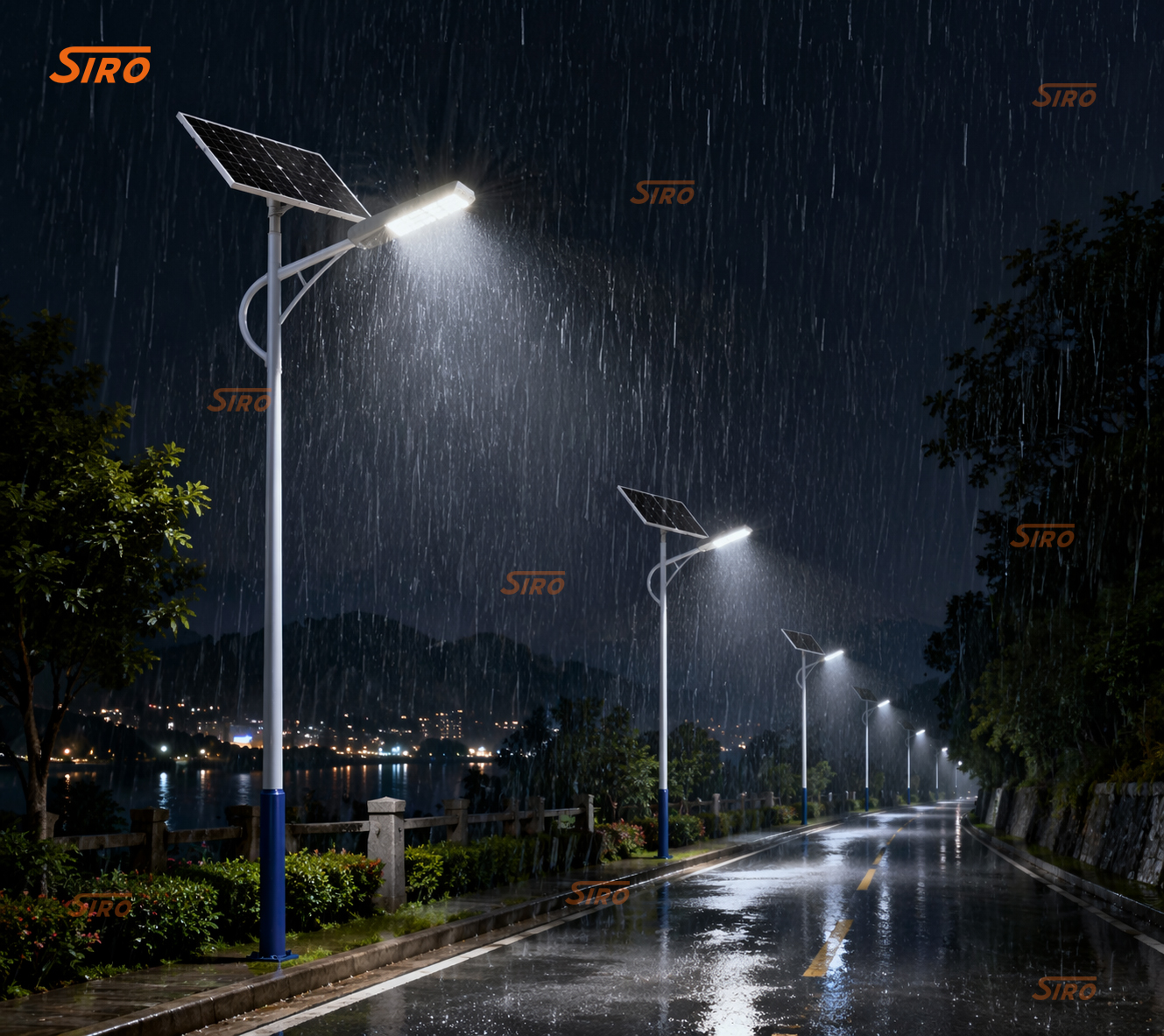
A high-quality solar street light should still maintain stable operation during cloudy and rainy days because the system is supposed to be designed with power balance in mind. That includes solar panel efficiency, battery capacity, controller performance, LED load matching, waterproof structure, and proper installation direction.
If the lamp fails quickly in rainy weather, it often means the system was already too weak before the rain started.
2. Water Intake: The Most Common Structural Problem
One of the most serious causes of solar street light failure in rainy season is water ingress. Many products claim to be waterproof, but real outdoor waterproofing is not just about putting a rubber ring around the housing. It depends on the entire structural design.
Water can enter from cable entry points, poorly sealed screws, cracked silicone edges, low-quality connector joints, breathing holes without proper protection, or housing deformation after long outdoor exposure. Once moisture enters the fixture or battery compartment, it can lead to corrosion, short circuits, insulation breakdown, LED failure, or controller damage.
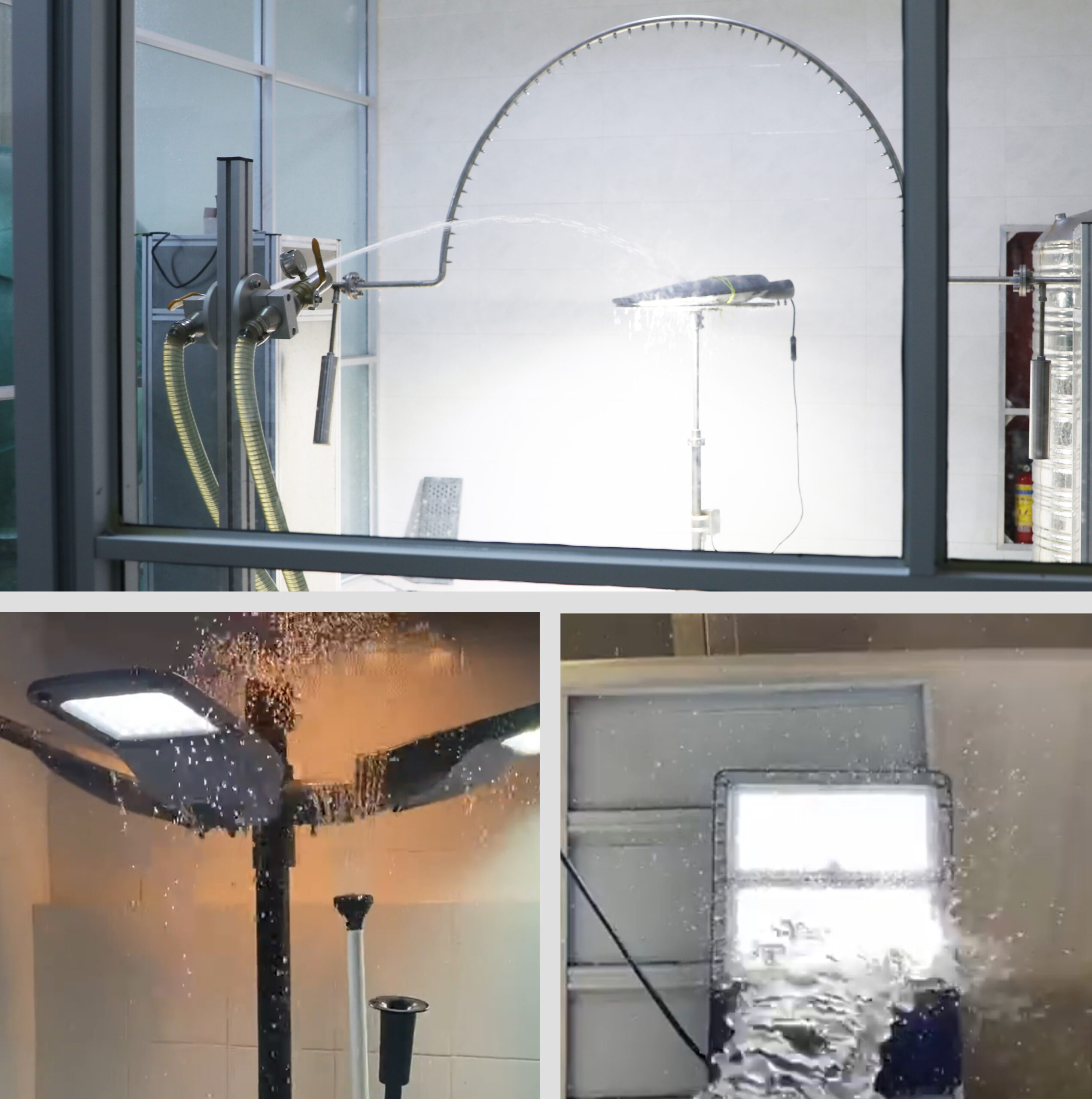
This is why structural waterproofing is more important than a printed IP rating alone. A true waterproof LED street light must be designed with long-term outdoor sealing reliability, not only temporary lab-level protection.
3. Battery Decay Becomes More Obvious in Rainy Season
The battery is the energy storage center of the solar street light system. In rainy season, reduced charging hours immediately expose battery weakness.
If the battery capacity is too small, the battery cells are low grade, or the battery has already started aging, the system will not be able to support continuous night lighting after several cloudy days. In many low-cost products, the battery specification looks acceptable on paper, but real usable capacity is much lower than advertised.
Battery decay is usually seen in the following ways:
- shorter lighting duration at night
- rapid brightness drop after midnight
- full shutdown after 1–2 rainy days
- unstable restart in the morning or evening
A professionally designed solar street light should match battery capacity to local rainy-day requirements, project latitude, lighting hours, and autonomy expectations. Otherwise, even a bright lamp at the beginning of the project may quickly become unreliable.
4. Wrong Installation Angle Reduces Charging Efficiency
Many failures in rainy season are actually installation failures, not manufacturing failures.
The solar panel must receive as much effective daylight as possible. If the tilt angle is wrong, the panel faces the wrong direction, or the panel is partially shaded by trees, buildings, walls, or signboards, charging efficiency will drop sharply. During the dry season, this issue may not seem obvious because sunlight is strong and recovery is faster. But in the rainy season, when available solar radiation is already limited, poor installation becomes a critical problem.
A wrong installation angle can cause:
- low daytime charging current
- incomplete battery recovery
- repeated deep discharge
- faster battery aging
- unstable night lighting performance
For this reason, installation design should always consider local latitude, seasonal sun path, surrounding obstructions, and drainage conditions. Even a high-quality product can perform badly if installed incorrectly.
5. Wire Problems Are Often Hidden but Dangerous
Wire-related problems are underestimated in many solar street light projects. In reality, loose connections, undersized cables, poorly crimped terminals, exposed copper, reversed polarity, or badly sealed joints can all lead to serious failure during rainy weather.
When water reaches a weak cable joint or damaged insulation point, the system may experience voltage drop, intermittent failure, controller errors, or complete shutdown. In some cases, wire problems do not cause immediate failure, but they gradually create oxidation and heating issues that become visible only after weeks or months of outdoor use.
Professional solar lighting systems require:
- correct wire gauge selection
- waterproof connectors
- secure terminal locking
- anti-corrosion treatment
- proper routing to avoid water accumulation
- sealed cable entry design
Reliable wiring is not a small detail. It is part of the entire outdoor durability strategy.
6. Rainy Season Reveals Whether the System Was Properly Engineered
A solar street light is not just a lamp. It is a complete energy system made up of generation, storage, control, and output.
That means real performance depends on how well these parts work together:
- solar panel charging efficiency
- battery energy reserve
- MPPT or controller charging logic
- LED power consumption balance
- structural waterproof reliability
- installation accuracy
If one part is weak, the entire system becomes unstable in bad weather. Rainy season is the real test of whether the product was designed for outdoor engineering use or only for short-term visual appeal.
7. How to Reduce Solar Street Light Failure in Rainy Season
To improve system reliability, buyers and project managers should pay attention to several critical points before purchasing or installation:
First, check whether the product uses a real structural waterproof design rather than only a marketing claim.
Second, confirm whether battery capacity is truly matched to local weather conditions and required backup days.
Third, verify the recommended installation angle and make sure there will be no shading during daytime.
Fourth, inspect the wiring system, cable sealing, and connector quality.
Fifth, ask whether the product has undergone aging tests, waterproof tests, and real outdoor simulation checks before shipment.
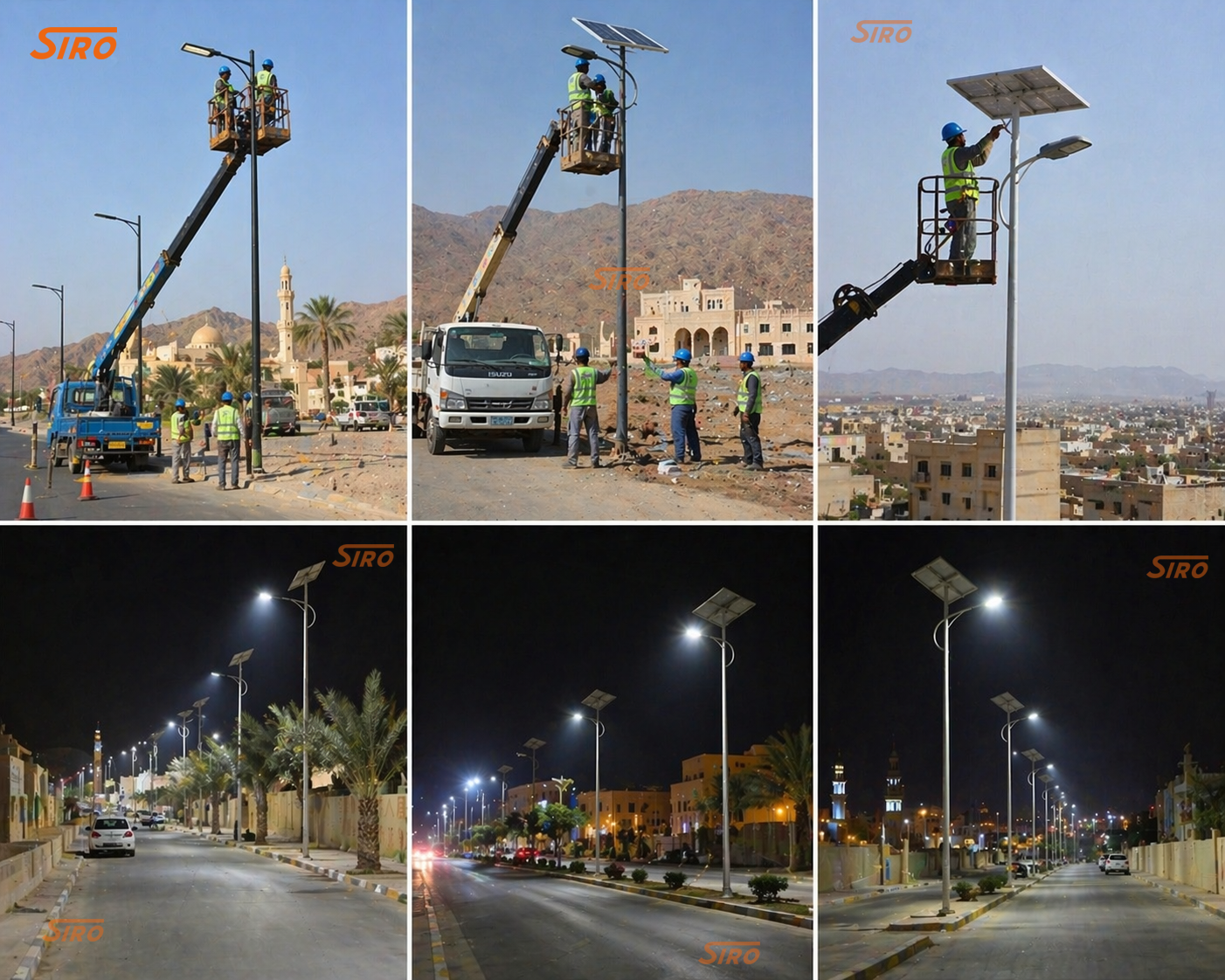
A dependable supplier will not only provide a quotation. They should also explain system matching logic, installation precautions, and real project reliability factors.
Conclusion
Solar street light failure in rainy season is rarely caused by rain alone. In most cases, the real reasons are water intake from weak structure, battery decay, incorrect installation angle, and hidden wire problems. These issues may remain unnoticed in dry weather, but they become critical once charging conditions get worse.
For outdoor lighting projects, long-term reliability depends on engineering details, not just wattage labels or initial brightness. A truly reliable waterproof LED street light must be designed to handle real rain, real humidity, real charging fluctuation, and real outdoor installation conditions.
When choosing a solar street light supplier, professional buyers should focus on system design, structural quality, and field reliability. Because in the rainy season, the difference between a normal product and an engineered product becomes very clear.